Aug. 17, 2026
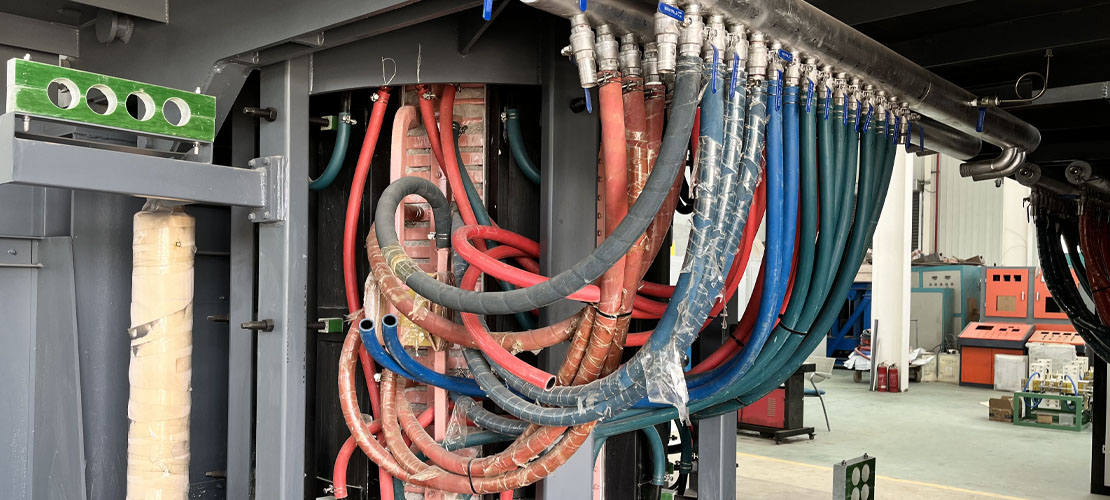
Medium-frequency induction furnace water-cooled cables are important current-carrying connection components in medium-frequency induction furnace systems, mainly used to transmit high currents between the medium-frequency power supply and the induction coil. Because medium-frequency induction furnaces operate with high current, substantial heat generation, and demanding working conditions, conventional cables may not provide sufficient long-term cooling and mechanical performance. Water-cooled cables with internal circulating-water cooling therefore provide an effective solution for electrical connections in medium-frequency furnace systems.
Water-cooled cables use high-conductivity flexible copper conductors to transmit current while circulating cooling water removes heat generated during operation, thereby reducing cable temperature rise and improving the stability and safety of high-current transmission. Their performance depends not only on conductor cross-sectional area, but also on cooling-water flow rate, outer hose performance, connection design, insulation properties, and mechanical strength.
This article provides a comprehensive overview of water-cooled cable construction, key technical specifications, manufacturing processes, quality inspection, transportation, storage, and maintenance, helping users of medium-frequency induction furnaces and metallurgical equipment better understand water-cooled cables.
A water-cooled cable is a flexible high-current cable featuring a circulating-water cooling structure, mainly used in medium-frequency induction furnaces, induction heating equipment, and other industrial electrical systems requiring high-current transmission.
Unlike conventional power cables, water-cooled cables incorporate an internal cooling-water passage. During equipment operation, current flows through the flexible copper conductor while cooling water circulates through the cable and removes heat generated by the conductor. This allows the cable to maintain stable operation under relatively high current loads.
Therefore, a reliable water-cooled cable should provide:
Excellent electrical conductivity
Stable water-cooling performance
Reliable insulation performance
Adequate mechanical strength
Good flexibility
Reliable end sealing and connection performance
A water-cooled cable generally consists of the following main components:
Outer hose, flexible copper conductor, clamps, cable terminals, water nozzles, and related connection components.
The outer hose is generally manufactured from high-strength synthetic rubber and incorporates a fabric reinforcement layer, allowing it to withstand internal cooling-water pressure as well as mechanical stress generated during equipment operation.
The flexible conductor is mainly made of highly conductive stranded copper wire. Through appropriate structural design and insulation treatment, it provides efficient current transmission while maintaining the flexibility required for the cable.
The cable terminal is used to establish a reliable connection between the water-cooled cable and equipment such as the medium-frequency power supply and induction coil. The terminal and copper conductor are generally connected using a cold-pressing process, reducing the increase in contact resistance and localized thermal effects that may result from conventional welding.
Clamps are used to secure the outer hose and terminal connection area. Non-magnetic stainless-steel clamps can help reduce potential effects in magnetic-field environments while improving the stability of the connection area.
The selection of a water-cooled cable should not be based solely on conductor cross-sectional area. It is also necessary to consider rated current-carrying capacity, cooling-water flow rate, working water pressure, minimum bending radius, insulation performance, and mechanical strength.
The nominal cross-sectional area of the flexible conductor is generally expressed in mm² and is one of the key factors affecting the current-carrying capacity of a water-cooled cable.
During actual cable selection, the appropriate conductor cross-sectional area should be determined according to the output current of the medium-frequency power supply, operating conditions, operating time, and cooling conditions. A larger cross-sectional area generally supports higher current loads, but it also increases the overall size and weight of the cable.
Rated current-carrying capacity refers to the current that a water-cooled cable can safely transmit under specified operating conditions.
Because water-cooled cables rely on circulating water for heat dissipation, their actual current-carrying capacity is related to cooling-water flow rate, water temperature, conductor cross-sectional area, and continuous operating time. Therefore, the current-carrying capacity of a water-cooled cable should not be evaluated independently of the cooling system.
Cooling water is an essential condition for the normal operation of a water-cooled cable. A stable and sufficient water flow can continuously remove heat generated by the conductor and reduce the operating temperature of the cable.
Therefore, when installing a water-cooled cable for a medium-frequency furnace, the cooling system should provide a stable water supply. The water circuit should also be inspected regularly for blockage, leakage, or insufficient flow.
Water-cooled cables offer good flexibility, but the specified minimum bending radius must still be maintained during installation.
An excessively small bending radius may subject the outer hose to excessive mechanical stress and may even affect the internal copper conductor and cooling-water passage. Therefore, sharp bends, excessive bending, or prolonged mechanical loading in a bent condition should be avoided during the installation and maintenance of medium-frequency furnace equipment.
The Geometric Mean Radius (GMR) is an important electrical parameter used in high-frequency and medium-frequency electrical system design and can be used in calculations involving inductance and other electrical characteristics.
For medium-frequency induction furnace systems, the structural and electrical parameters of the water-cooled cable are closely related to system matching and design. Therefore, cable selection and system design should take into account the actual operating frequency, current, and equipment configuration.
To ensure the long-term stable operation of water-cooled cables in medium-frequency induction furnaces and similar equipment, the outer hose, conductor connections, and overall structure must meet corresponding electrical, mechanical, and hydraulic performance requirements.
According to the original technical requirements:
The breakdown voltage of the outer protective rubber hose should be above 4000 V
The working water pressure should be no less than 0.8 MPa
The test tensile force for a cable with a nominal cross-sectional area of 200 mm² is 15 kN
For every additional 100 mm² of cross-sectional area, the test tensile force increases by 5 kN
The electrode and conductor should use a reliable cold-pressed connection structure
Cable connection areas should provide good sealing and electrical conductivity
These specifications collectively determine the reliability of a water-cooled cable when operating under high-current, high-temperature, and high-mechanical-stress conditions.
Although water-cooled cables are flexible connection products, their manufacturing process involves multiple operations, including copper conductor processing, end cold pressing, rubber outer hose installation, mechanical fastening, and sealing.
The precision of the manufacturing process directly affects the electrical conductivity, mechanical strength, sealing performance, and service life of the water-cooled cable.
The cable terminal is an important component connecting the water-cooled cable to the equipment, and its machining quality directly affects connection reliability.
During production, suitable copper bar material is selected according to the product drawings. CNC lathes, milling machines, and other precision machining equipment are then used to manufacture the terminal so that its dimensions, shape, and connection positions meet the design requirements.
An integral machining process can reduce potential defects associated with welded connections while improving the mechanical strength and long-term service stability of the cable terminal.
The stranded copper wire is accurately cut according to the specified product length, followed by end preparation.
The end of the stranded copper wire is then compressed and formed using a dedicated bundling die on a high-pressure hydraulic press operating at approximately 320 kgf/cm².
This process requires strict control of equipment pressure, die dimensions, and operating precision. The quality of the crimping process directly affects subsequent electrode installation and current-transmission stability.
After the stranded copper wire has been bundled, a dedicated copper-head pressing die is used to cold-extrude the stranded copper wire into the cable terminal.
This cold-pressing method creates a stable mechanical and electrical connection while reducing localized thermal effects and changes in contact resistance that may occur during welding.
For high-current water-cooled cables, the quality of the terminal connection is an important factor affecting overall performance. Therefore, pressing force, die accuracy, and connection condition must be strictly controlled.
After the copper conductor and cable terminals have been assembled, specialized equipment is used to install the pre-prepared outer hose over the stranded copper conductor. The relative position between the rubber hose and copper terminal is accurately controlled according to the design requirements.
Finally, the outer hose is secured using non-magnetic stainless-steel clamps with a locking structure.
A properly designed clamping structure improves the reliability of the cable end connection while reducing potential adverse effects of metal components in magnetic-field environments.
Water-cooled cables operate under high-current and demanding industrial conditions for extended periods. Therefore, strict quality inspection is required before delivery.
A complete quality inspection process generally includes insulation resistance testing, withstand-voltage testing, water-pressure testing, and mechanical tensile testing.
Insulation resistance is an important indicator for evaluating the insulation performance of a water-cooled cable.
According to the original inspection requirements, testing may be conducted in accordance with the method specified in GB/T 10066.1-1988, with insulation resistance measured between the flexible conductor and an auxiliary electrode.
The auxiliary electrode may consist of a water tank, graphite coating, or metal foil, creating a relatively stable equipotential condition on the outer surface of the protective hose.
When a water tank is used as the auxiliary electrode, the length of the cable ends extending above the water surface should be controlled at approximately 300 mm to ensure consistent test conditions and reliable measurement results.
The withstand-voltage test is primarily used to verify the safety performance of the water-cooled cable insulation system under the specified voltage conditions.
During the test, the test voltage is gradually increased while the cable is monitored for breakdown, flashover, or other abnormal conditions.
The withstand-voltage test provides further verification of the reliability of the outer hose and related insulation structures, helping reduce the risk of insulation failure during actual high-voltage operation.
The water-pressure test is mainly used to inspect the cooling-water passage and sealing performance of the outer hose.
According to the original technical requirements, a pressure of 0.8 MPa is applied and maintained for 30 minutes. The cable is then inspected for leakage, while the outer hose is checked for blistering, localized deformation, or other abnormalities.
For water-cooled cables, reliable water-circuit sealing is extremely important. Cooling-water leakage can not only reduce heat-dissipation performance but may also create safety risks for the electrical connection system.
The tensile test is used to verify the mechanical strength of the overall water-cooled cable structure and its end connections.
During testing, the assembled cable is installed on dedicated tensile-testing equipment, and the specified test load is gradually applied.
According to the original technical requirements:
| Nominal Cable Cross-Sectional Area | Test Tensile Force |
|---|---|
| 200 mm² | 15 kN |
| For every additional 100 mm² | Increase by 5 kN |
During the test, particular attention should be paid to whether the electrode, copper conductor, and outer hose connections become loose, detached, or structurally abnormal, ensuring that the water-cooled cable can withstand the mechanical stresses generated during actual equipment operation.
After all inspections have been completed, the water-cooled cable requires appropriate pre-delivery treatment.
Any residual water inside the cable should be completely drained, and compressed air should be used for drying to reduce the risk of internal corrosion during long-term transportation and storage.
The outer hose can be cleaned using a nylon brush and clean water, while the surface of the cable terminals can be wiped with acetone to ensure surface cleanliness.
For large water-cooled cables, wooden crates or similar packaging methods can be used. During packaging, particular attention should be paid to the cable bending radius to prevent excessive bending or mechanical damage caused by improper transportation and securing methods.
Water-cooled cables are industrial electrical products featuring flexible structures and precision connection components. During transportation, they should be protected from impact, compression, and excessive bending.
For large and heavy cables, suitable lifting and handling equipment should be used, and loading and unloading should be performed by trained personnel.
During transportation, the cable should be properly secured to prevent prolonged suspension, dragging, or bending beyond the specified bending radius. This helps protect the internal conductor, cooling-water passage, and end connection structure.
Water-cooled cables should be stored in a dry, clean, and well-ventilated indoor environment, away from oil, corrosive gases, and other substances that may affect the performance of rubber and metal components.
The recommended storage temperature is -10°C to 55°C. Long-term exposure to extreme temperatures should be avoided.
During long-term storage, the outer hose, metal connection components, and internal condition of the cable should be inspected regularly to prevent moisture, corrosion, or material aging from affecting product performance.
For water-cooled cables operating continuously in medium-frequency induction furnace systems, a regular inspection program should be established.
The following items should be checked regularly:
Whether the cooling-water flow rate is normal
Whether there is any leakage in the cooling-water system
Whether the cable surface temperature is abnormally high
Whether the outer hose has cracks, blistering, or deformation
Whether the electrode connection is loose
Whether the clamps remain securely fastened
Whether the cable has excessive bending or mechanical damage
If insufficient water flow, abnormal temperature, outer hose damage, or loose connections are detected, the relevant equipment should be stopped promptly and inspected by qualified technical personnel.
Proper installation, effective cooling-water management, and regular maintenance can reduce the failure rate of water-cooled cables and extend their service life.
Water-cooled cables are mainly used in industrial equipment requiring flexible high-current connections, with medium-frequency induction furnaces being one of their typical applications.
In a medium-frequency induction furnace system, water-cooled cables generally transmit current between the medium-frequency power supply and the induction coil. Because medium-frequency power supplies deliver high output currents and generate continuous heat during operation, the cables must provide both high current-carrying capacity and effective heat dissipation.
Compared with conventional cables, the water-cooling structure can rapidly remove heat generated by the conductor through circulating cooling water, allowing the cable to maintain a relatively stable operating temperature under high current loads.
Therefore, when selecting a water-cooled cable for a medium-frequency furnace, users should consider the medium-frequency power supply capacity, operating current, frequency, connection distance, installation space, cooling-water conditions, and cable bending requirements.
For medium-frequency induction furnaces and other high-current equipment, water-cooled cable selection should take the following factors into consideration:
First, determine the operating current.
Determine the required cable cross-sectional area and current-carrying capacity according to the equipment's rated current and actual operating conditions.
Second, confirm the cooling conditions.
Check the water flow rate, water pressure, and water temperature available from the equipment cooling system to ensure that the cooling requirements of the water-cooled cable can be met.
Third, confirm the installation dimensions.
Determine the appropriate cable specifications and minimum bending radius according to the available installation space, cable length, and range of movement.
Fourth, confirm the connection method.
The electrode dimensions, mounting-hole positions, and end connection structure should match the medium-frequency power supply and induction coil.
Fifth, verify the mechanical performance.
For applications involving long-term tension, movement, or mechanical vibration, particular attention should be paid to the cable's tensile strength, end fastening method, and outer hose strength.
Sixth, check the quality inspection procedures.
When selecting a water-cooled cable, users should verify whether the product has undergone insulation, withstand-voltage, water-pressure, and mechanical performance testing to ensure suitability for the actual industrial operating conditions.
Although water-cooled cables are connection components within medium-frequency induction furnace systems, their electrical conductivity, cooling performance, insulation, and mechanical properties can directly affect the operating stability of the equipment.
A high-quality water-cooled cable requires a comprehensive quality-control system covering material selection, copper conductor processing, cable terminal manufacturing, cold-pressed connections, outer hose assembly, insulation testing, water-pressure testing, and mechanical performance testing.
For users of medium-frequency induction furnaces and high-current industrial equipment, selecting the appropriate water-cooled cable specifications and implementing proper cooling-system management, installation, and regular maintenance are essential for safe equipment operation and extended cable service life.
Sanrui Furnace specializes in the R&D, manufacturing, and quality control of water-cooled cables and furnace-related products, and provides comprehensive after-sales support. Under the original service policy, within 12 months from the date of delivery, if a product is damaged or cannot operate normally due to manufacturing quality issues, the company provides corresponding repair or replacement services.
Latest News
Latest Products
Customized metallurgical machinery and equipment range: Electric Arc Furnace, Submerged Arc Furnace, LF Refining Furnace, Vacuum Furnace, Induction Furnace, Dust Remove System, Water Treatment Equipment, etc. Providing the most advanced equipment integration services, metallurgical equipment can be customized according to different needs of customers, and production capacity can be adjusted according to customer requirements.
Electric Arc Furnace
Submerged Arc Furnace
LF Refining Furnace
VD / VOD Vacuum Refining Furnace
Induction Furnace
Furnace Accessories
The 5 ton electric arc furnace for steel-making is a special purpose equipment that makes ordinary steel, quality carbon steel, alloy steel and non-corrosive steel with electric arc as heat source and scrap steel (iron) as raw material.
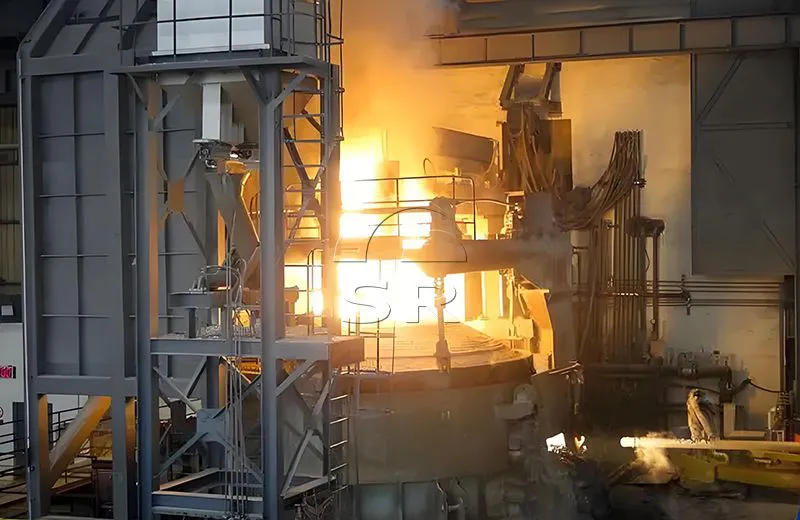
15-ton electric arc furnace is used for the short-process steelmaking process, using 100% scrap steel or scrap steel + molten iron (pig iron), or scrap steel + sponge iron (DRI) as raw materials for steelmaking.
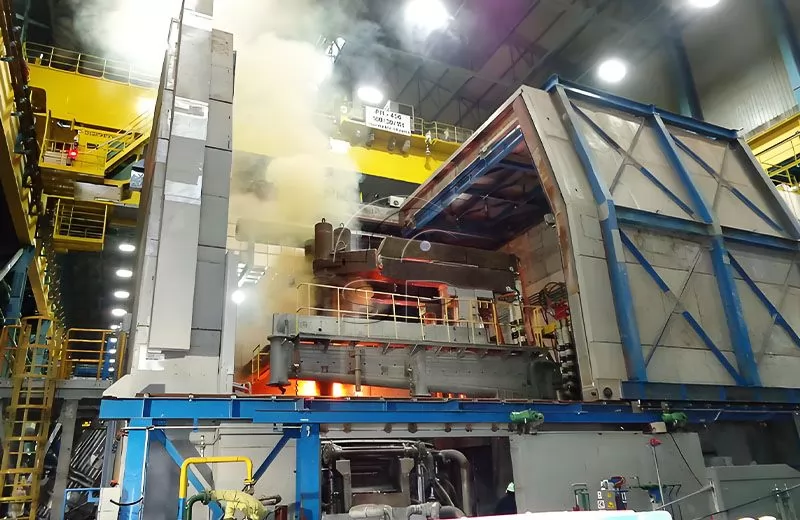
The 30-ton AC electric arc furnace is used to melt scrap steel to produce steel. Electrical energy is used to melt scrap steel. An arc forms between the charged material and the electrode.
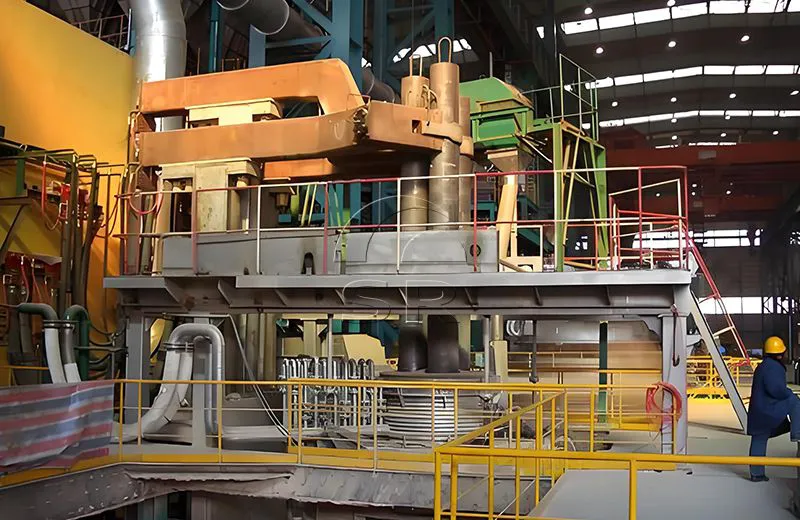
30 Ton electric arc furnace is used for steelmaking short process smelting, using 100% scrap steel or scrap steel + molten iron (pig iron), or scrap steel + sponge iron (DRI) as raw materials for steelmaking.
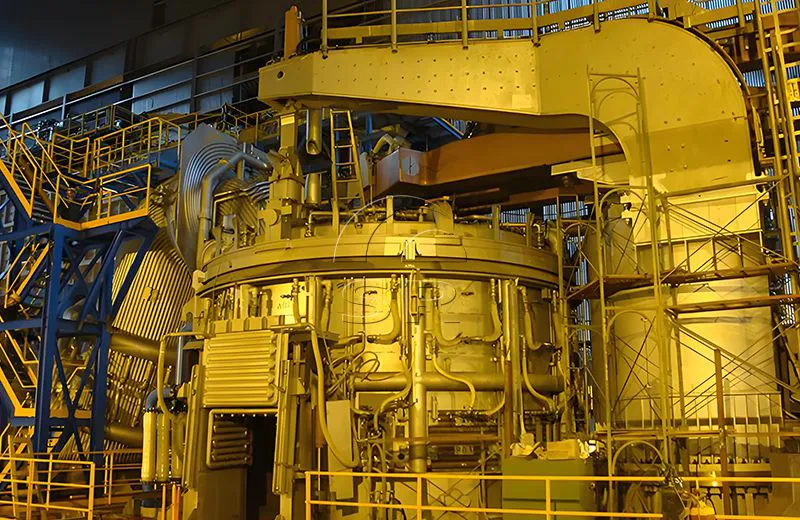
The 50-ton ultra-high power electric arc furnace (50TUPH EAF) adopts ultra-high power, high impedance technology, bottom tapping technology (ETB), furnace wall oxygen oil burner and furnace door carbon-oxygen gun technology.
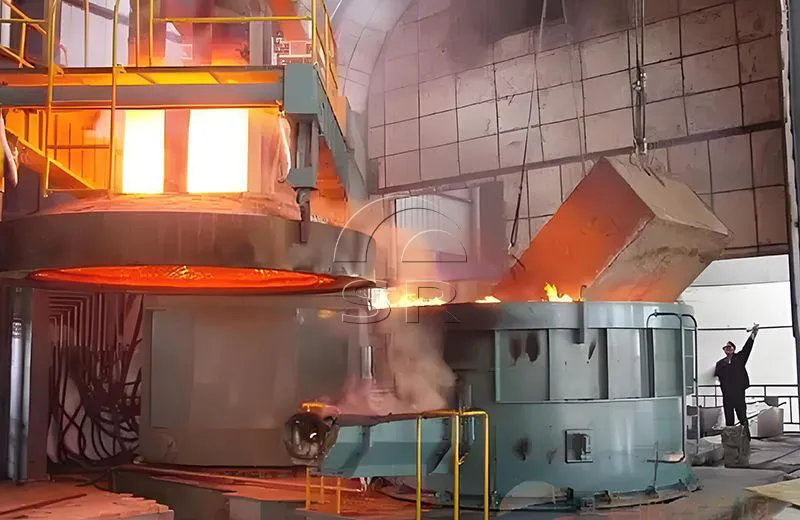
DC electric arc furnace is an electric arc furnace supplying electric energy with DC power supply. There is only one electrode on the top of the DC arc furnace, which is the negative electrode, and the bottom electrode is the positive electrode.
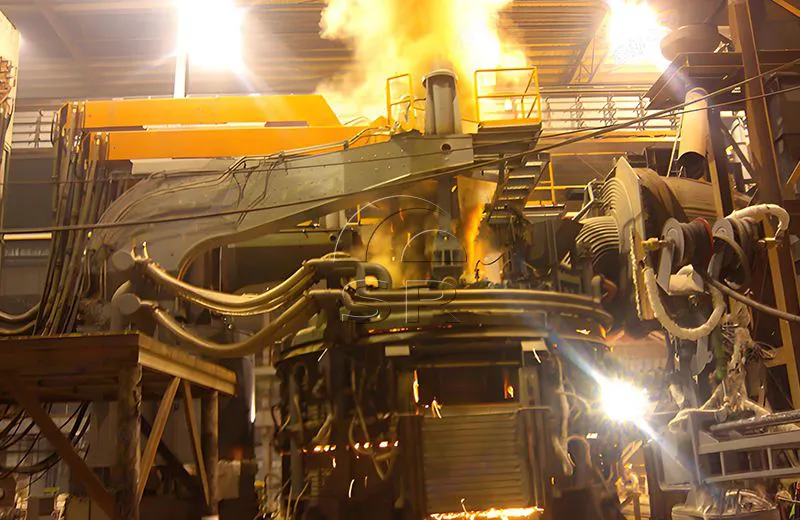
Electric arc furnaces are used to melt scrap steel for steel production. Electrical energy is used to melt scrap steel. An arc forms between the charged material and the electrode. The heat generated by the arc melts the scrap.
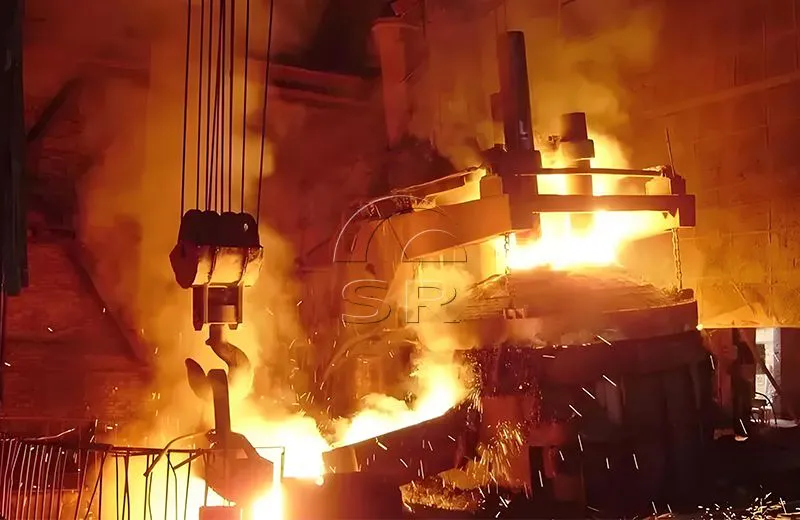
Electric arc furnace steel making is a steelmaking method that uses the thermal effect of electric arc to heat the charge for melting.
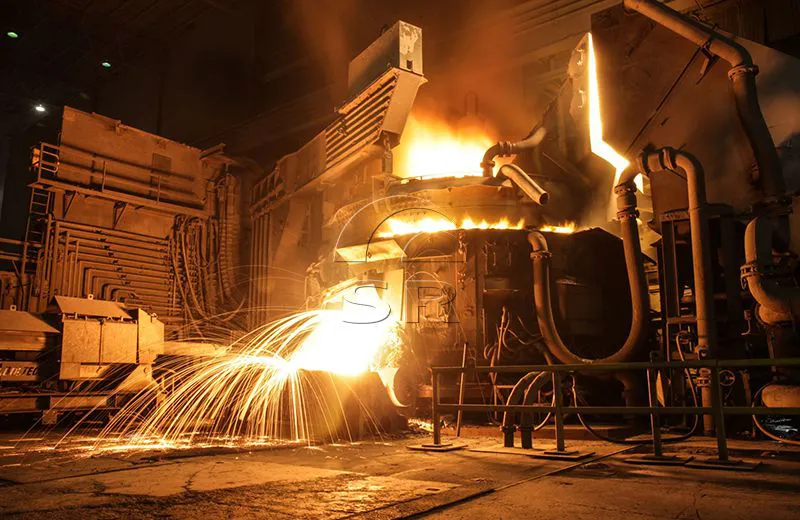
Ultra-high power electric arc furnace mainly changes the arc characteristics of high voltage and long arc to the arc characteristics of high current, low voltage and short arc
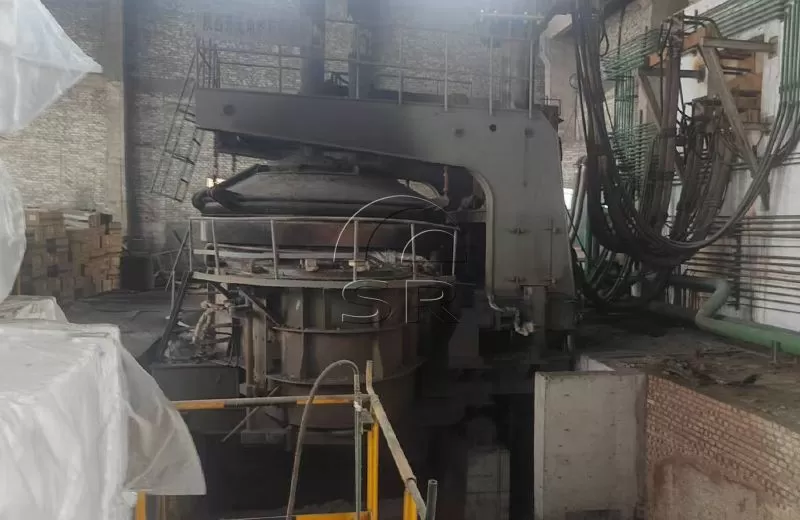
1 ton electric arc furnace is used for melting steel and titanium scrap metal. The principle of electric arc furnace is based on the generation of direct current, which converts electrical energy into heat energy through electrodes to melt the metal.
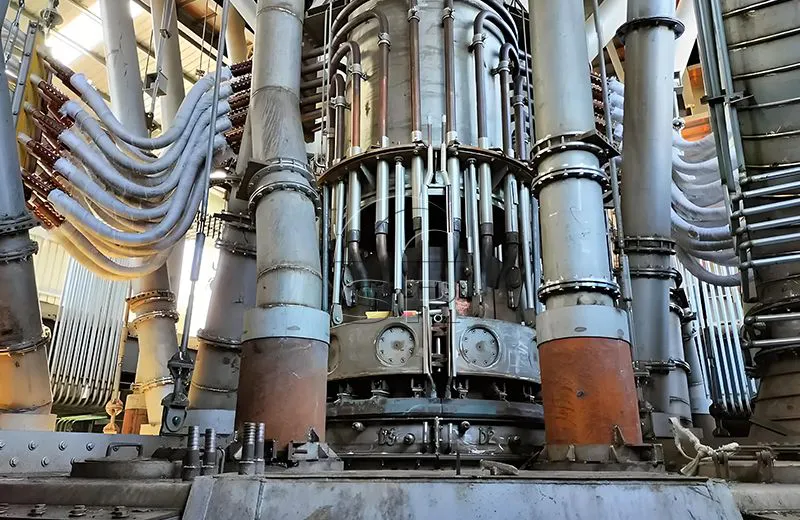
The closed pig iron furnace (submerged arc furnace iron making) is a non-blast furnace iron making method. Under the premise of guaranteeing the power supply, it is easy to solve the problem by using the reducing agent required by the submerged arc furnace iron making.
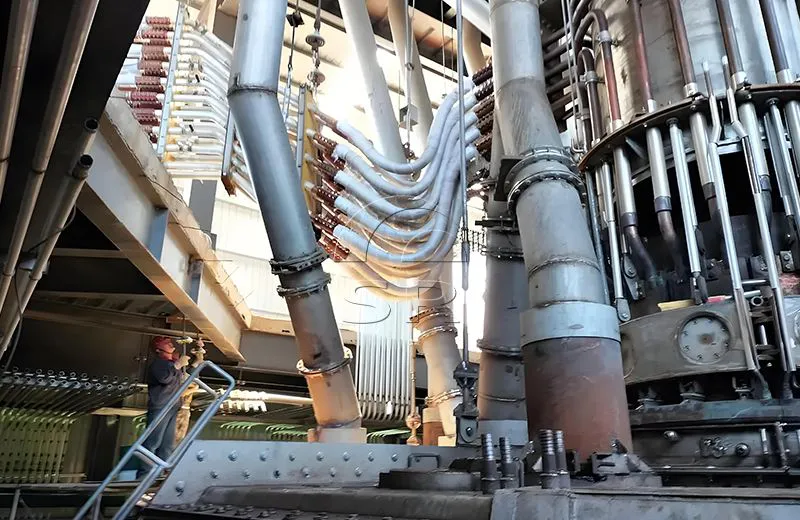
The main mechanical device design of Sanui ferroalloy refining furnace combines China's national conditions and draws on international advanced technologies such as Demark and Pyremate.
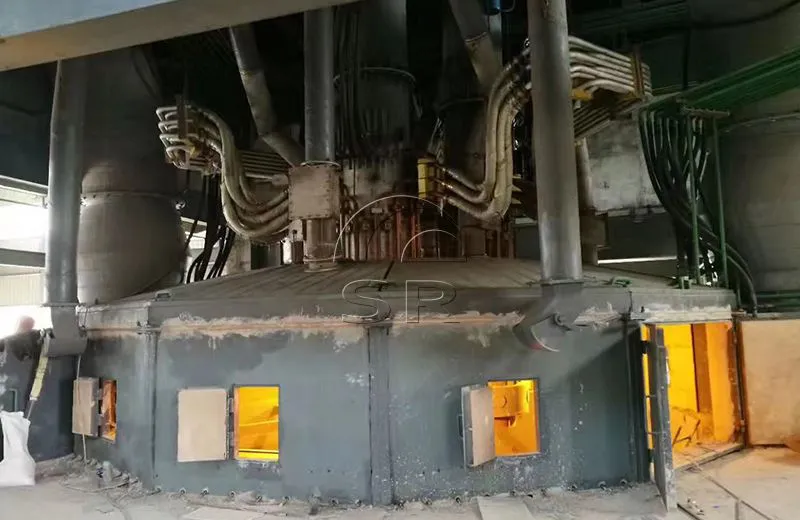
The Ferronickel submerged arc furnace is a special submerged arc furnace used for smelting nickel-iron alloy. Its main function is to add nickel ore, carbonaceous reducing agent (such as coke) and limestone and other raw materials into the furnace in a certain proportion
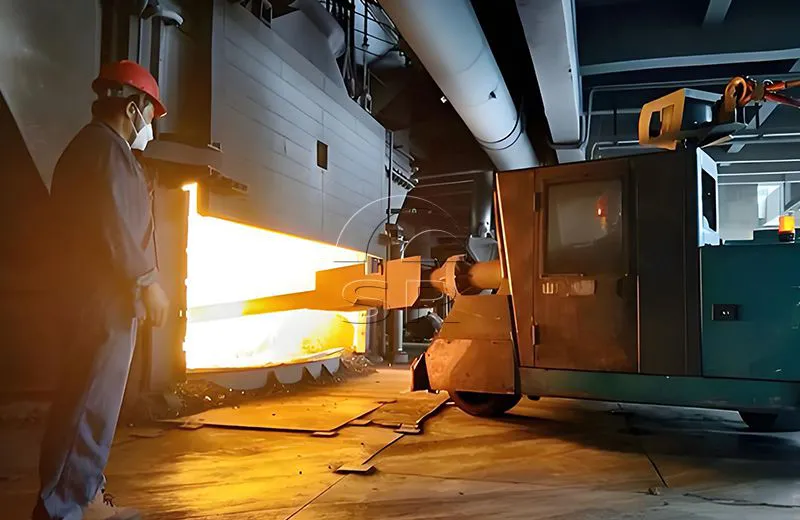
The main mechanical device design of Sanui ferrosilicon furnace combines China's national conditions and draws on international advanced technologies such as Demark and Pyremate.
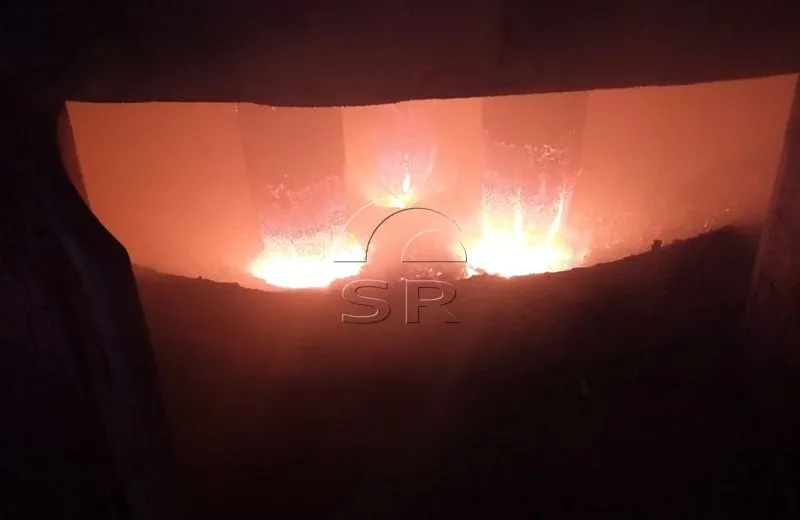
The main mechanical device design of Sanui high carbon ferrochrome furnace combines China's national conditions and draws on international advanced technologies such as Demark and Pyremate.
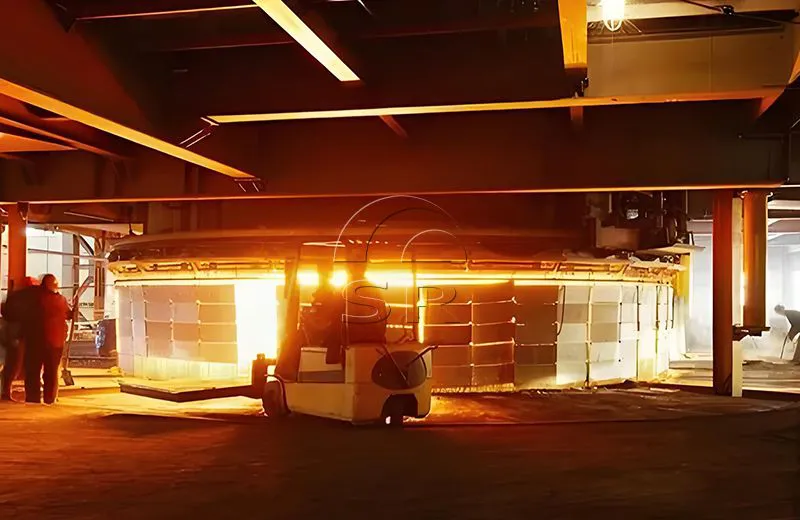
Industrial silicon submerged arc furnace is an important equipment in silicon ore processing, playing a key role in the silicon industry.
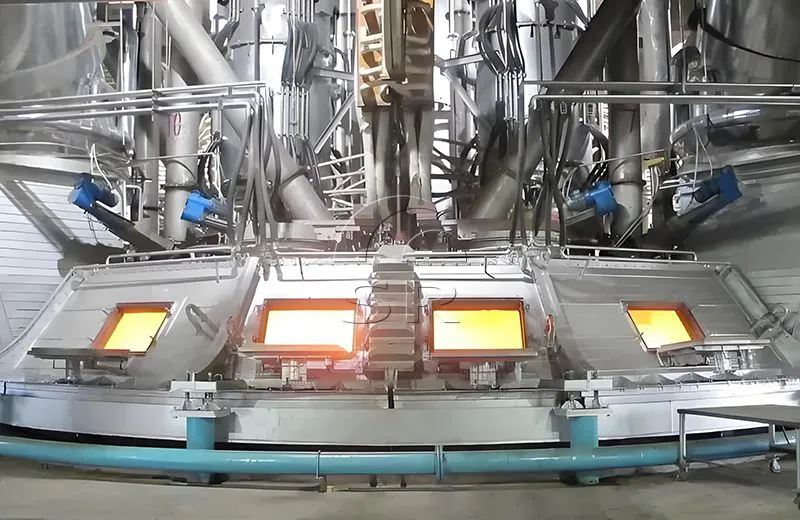
The manganese silicon alloy furnace is mainly used to smelt silicon-manganese alloy, which is an alloy containing silicon and manganese.
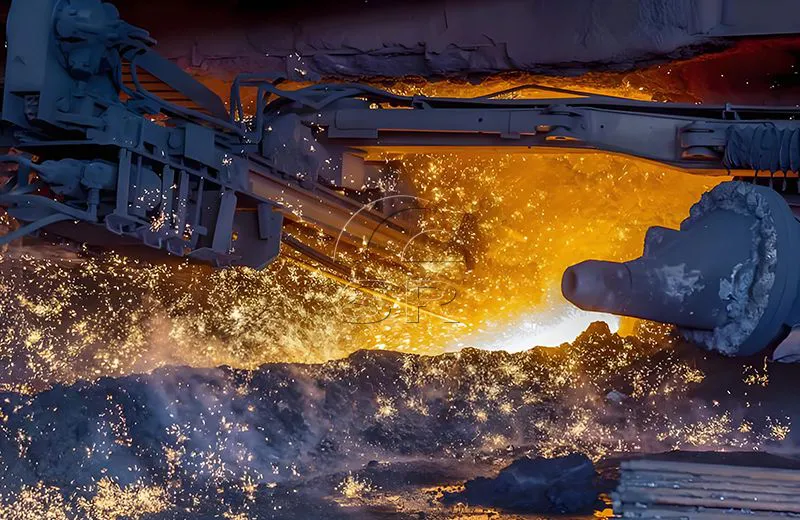
The design of the submerged arc furnace main mechanical device by Sanui is based on China's national conditions and draws on international advanced technologies such as Demark and Perlmutter.
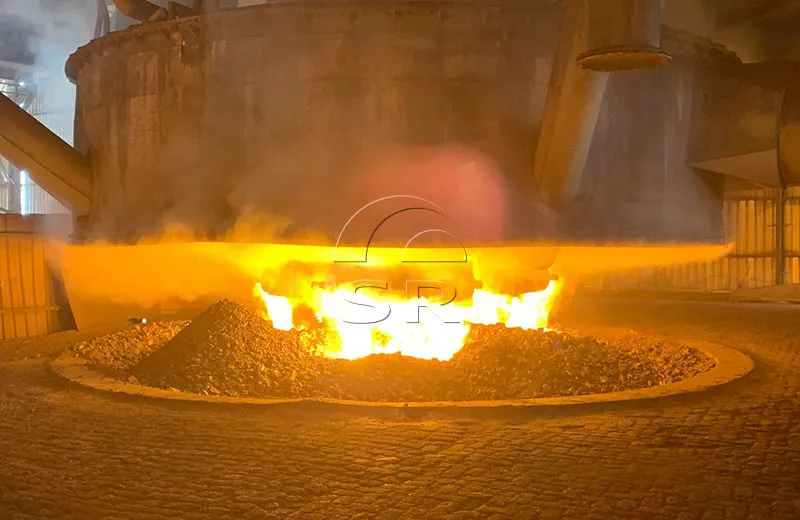
Submerged electric arc furnace is mainly used for reducing and smelting raw materials such as ore, carbonaceous reducing agent and solvent. It mainly produces ferroalloys such as ferrosilicon, ferromanganese, ferrochrome, ferrotungsten, silicon-manganese alloy, etc.
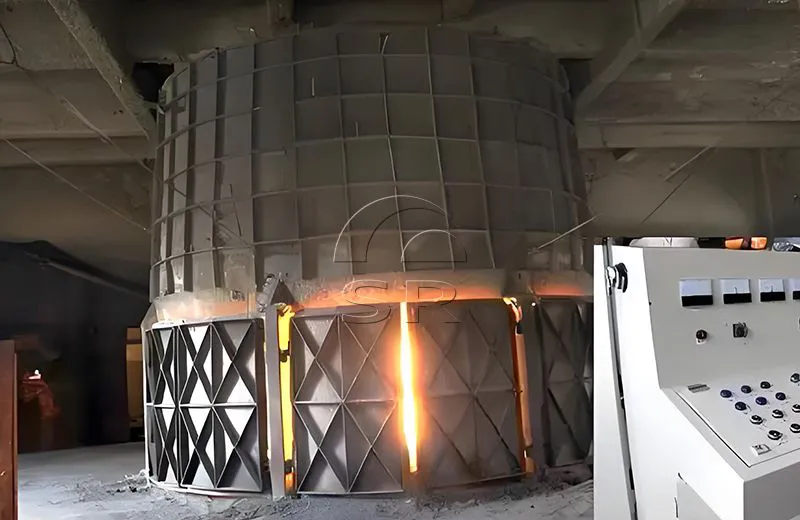
Titanium slag production adopts titanium slag electric furnace (circular furnace and rectangular furnace according to its shape) smelting process.
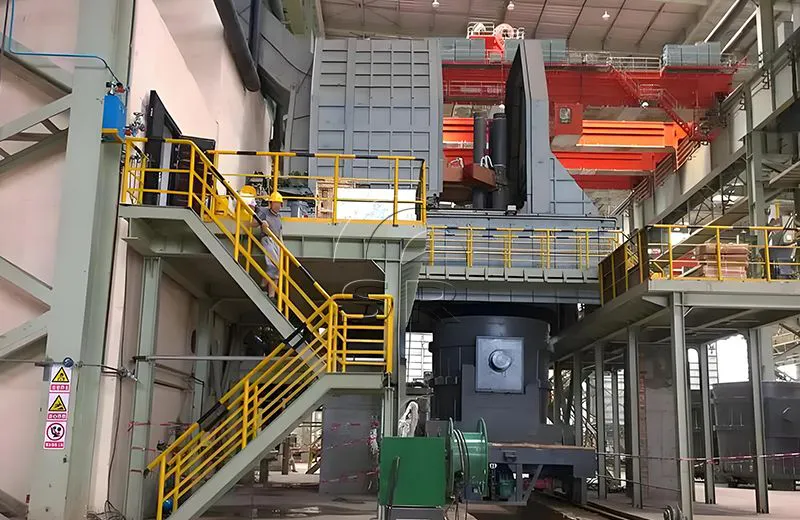
The LF 20 T ladle refining furnace has the functions of arc heating under normal pressure, argon blowing and stirring at the bottom of the ladle, and reducing slag making in the ladle.
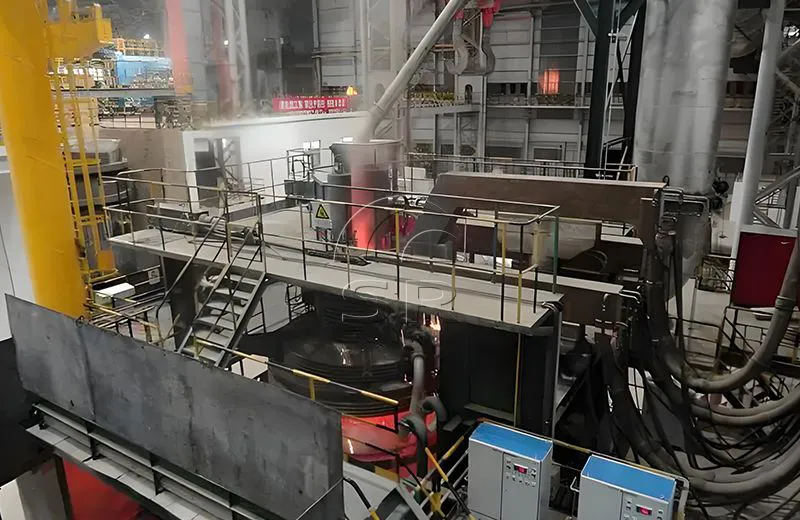
LF ladle refining furnace is a bottom-blown argon ladle furnace with three-phase submerged arc heating under normal pressure. It is a device for refining molten steel in a ladle.
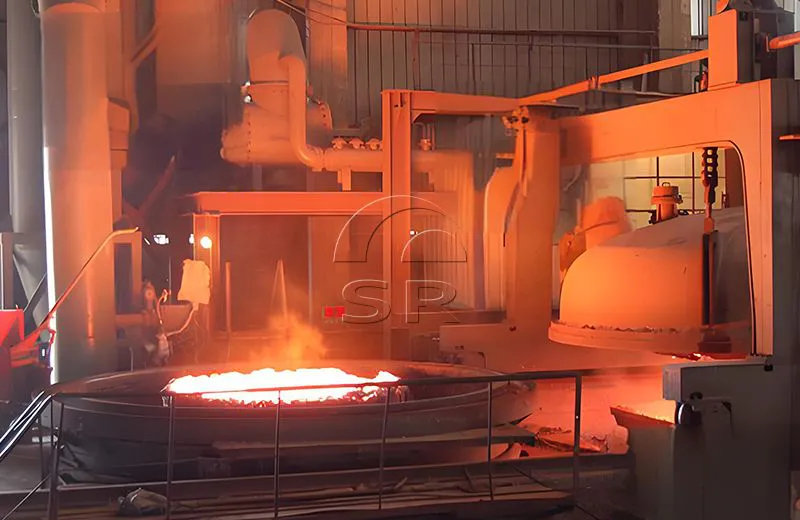
VD vacuum refining furnace is a commonly used refining process equipment, mainly used for deoxidation, impurity removal and other operations of molten steel, so as to obtain high purity, low impurity content of high quality steel.
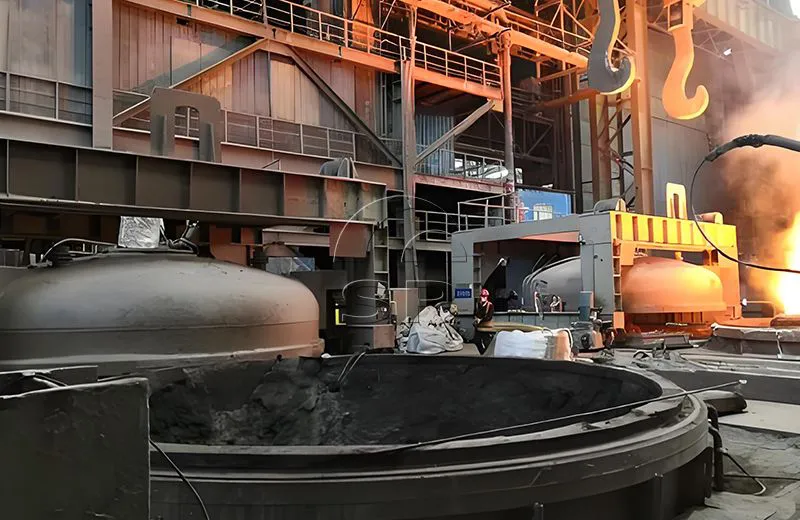
VOD vacuum refining furnace has multiple functions such as vacuum degassing, oxygen blowing decarburization, vacuum charging, argon blowing stirring, non-vacuum temperature measurement sampling, wire feeding, etc.
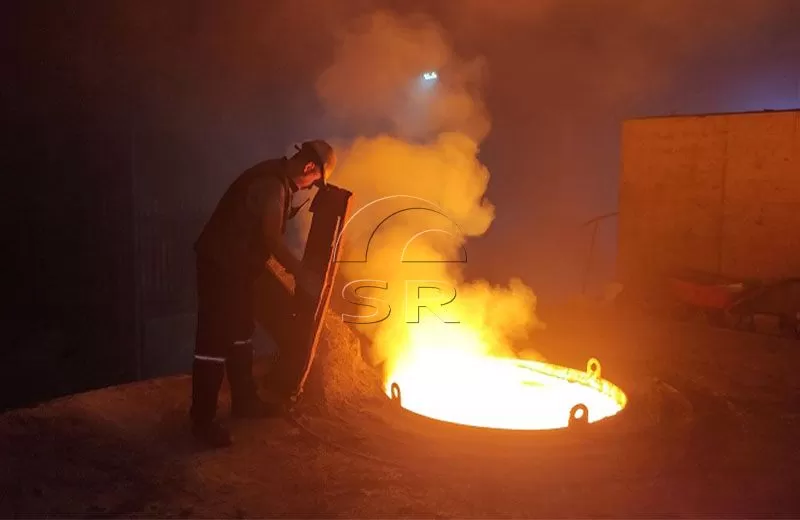
The cast steel melting induction furnace has outstanding advantages in heat penetration or melting soft magnetic alloys, high resistance alloys, platinum group alloys, heat-resistant, corrosion-resistant, wear-resistant alloys and pure metals.
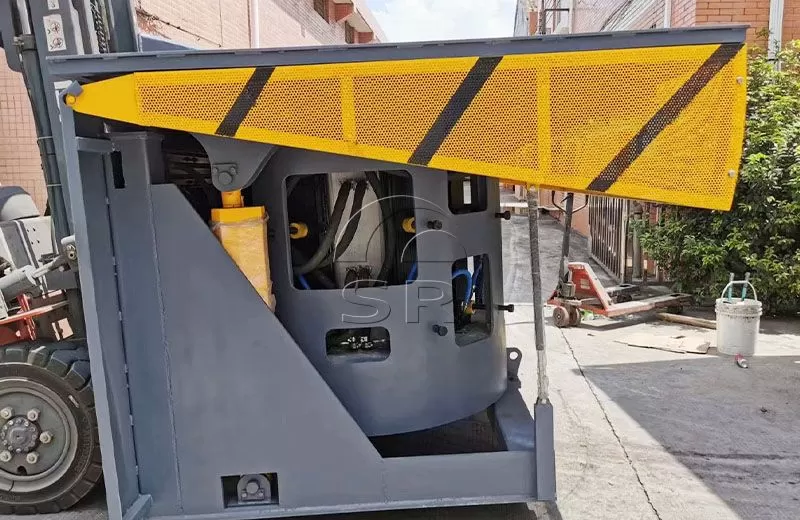
Metal silicon smelting furnace is a metal silicon medium frequency melting furnace, which consists of furnace body, water and electricity introduction system, furnace tilting device, etc. It has fast melting temperature rise, easy to control furnace temperature and high production efficiency.
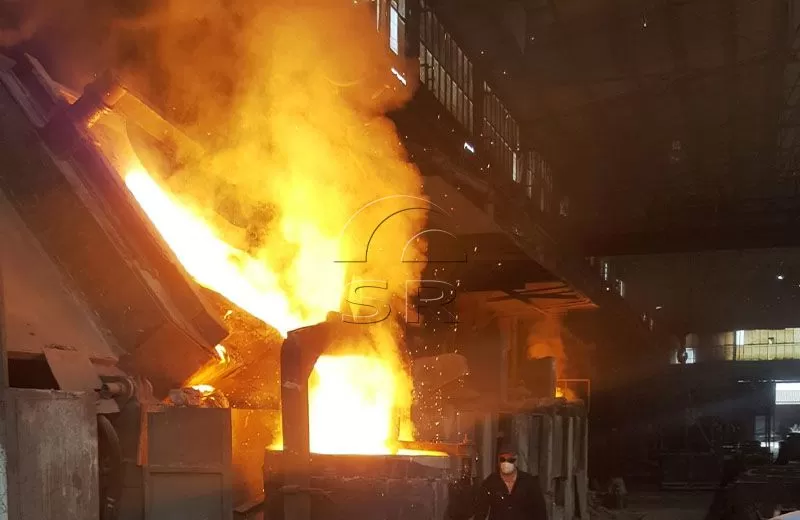
Medium frequency induction furnace mainly used for melting steel, alloy steel, special steel, stainless steel, and can also be used for melting and casting non-ferrous metals such as copper, aluminum, lead, zinc, etc. The customized range of induction furnaces sold by Sanrui ranges from 0.1 tons to 10 tons.
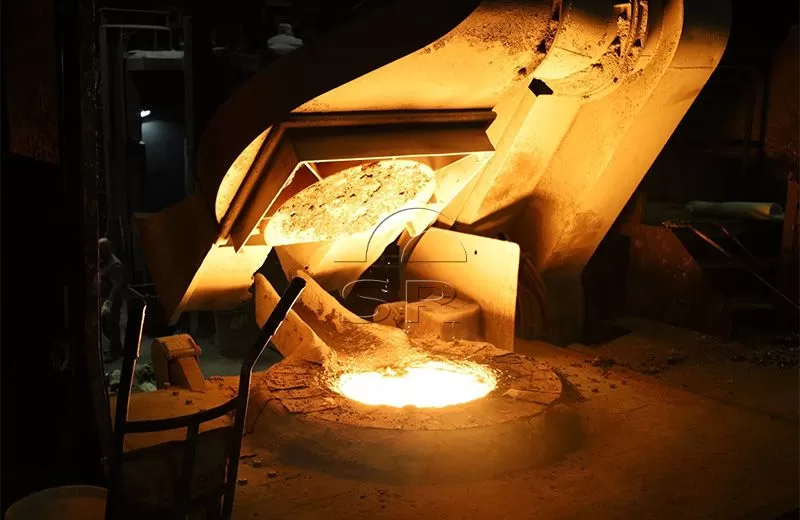
Medium frequency induction furnaces are mainly used for melting steel, alloy steel, special steel, stainless steel, and can also be used for melting and casting non-ferrous metals such as copper, aluminum, lead, and zinc.
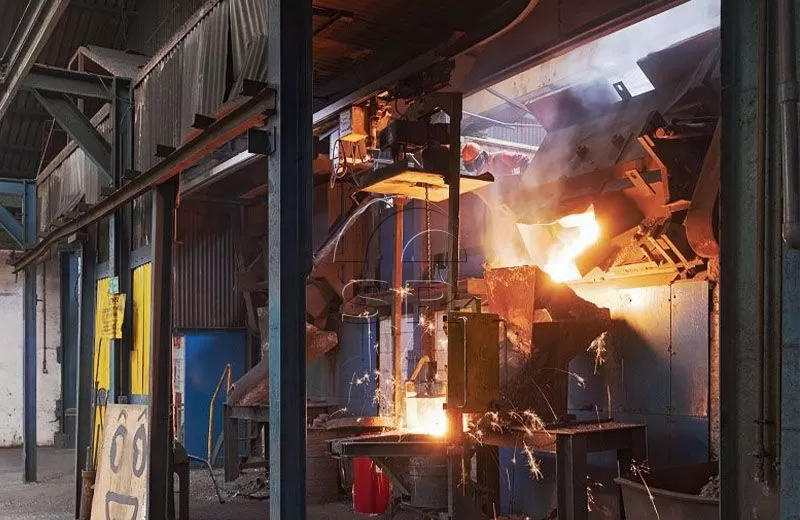
Medium frequency aluminum melting furnace is used for melting and heating aluminum, scrap aluminum, aluminum ingots, and aluminum alloys; The melting capacity ranges from 100KG to 3000KG.
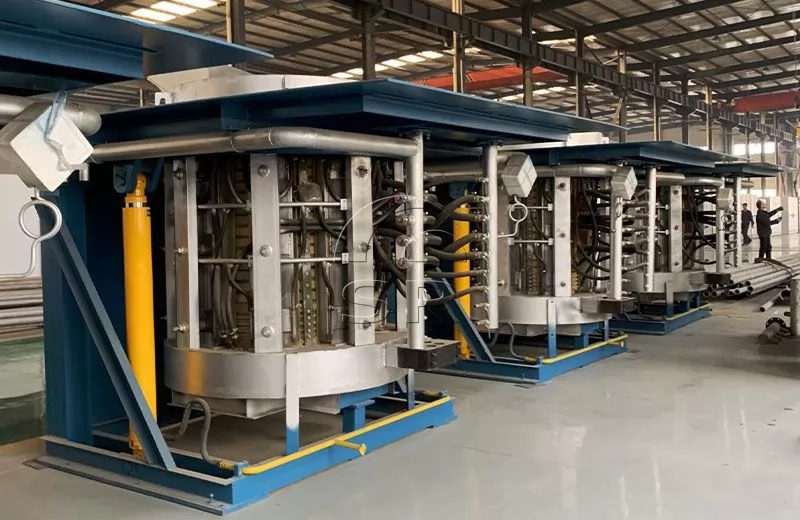
An induction furnace is an electric furnace that uses the induction electrothermal effect of the material to heat or melt the material. The main components of an induction furnace are sensors, furnace body, power supply, capacitors and control system.
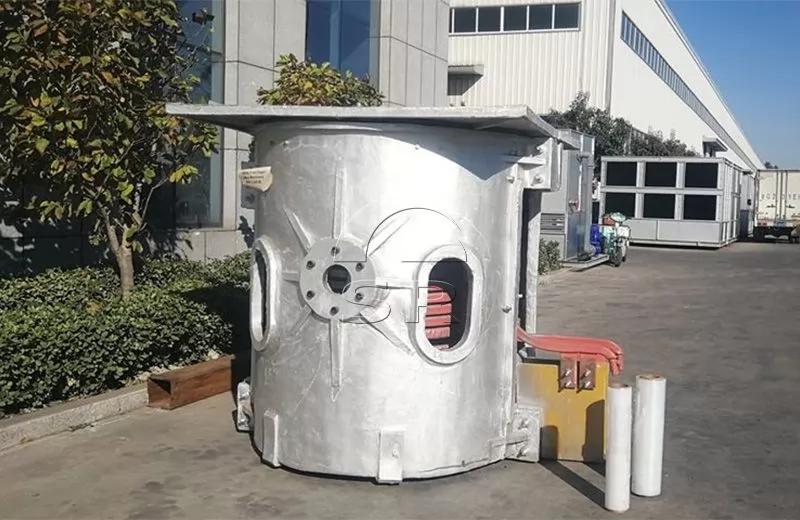
The 3-ton medium frequency coreless induction furnace adopts a 6-phase 12-pulse double rectifier control system. A 2000KVA special rectifier transformer is used for the 2000KW medium frequency power supply.
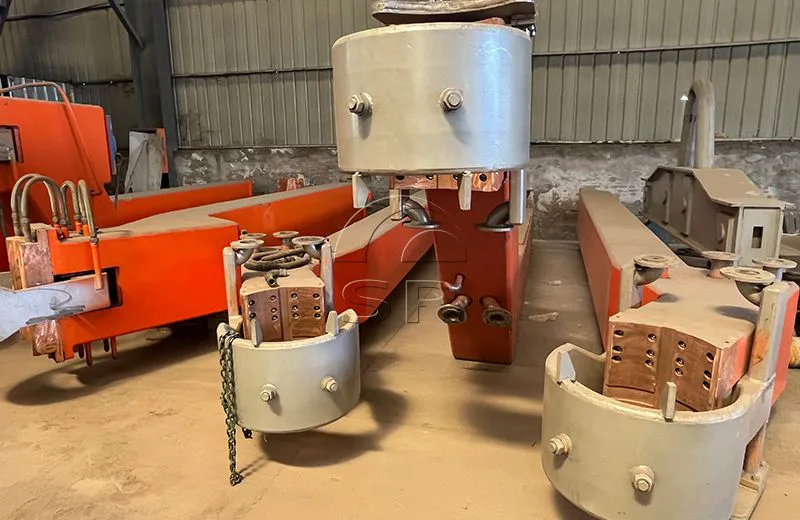
The conductive arm of an electric arc furnace (EAF) is primarily composed of the front electrode conductive arm holder, a water-cooled clamping ring, the arm body, and the rear conductive copper plate.
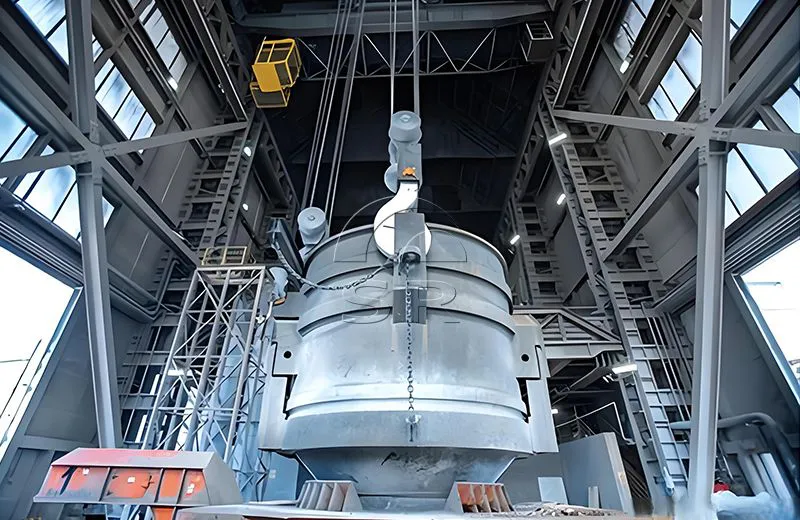
The scrap charging basket of the electric arc furnace is mainly used for loading and conveying raw materials such as scrap steel into the electric arc furnace for smelting.
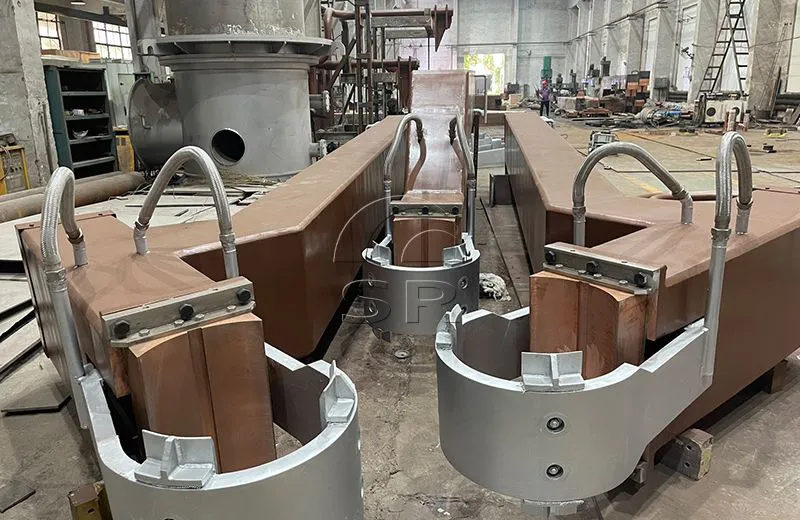
There are many insulation links between the EAF electrode holder and the conductive cross arm body, which greatly simplifies the cconductive cross arm structure and is a new type of electrode arm on the ultra-high power arc furnace.
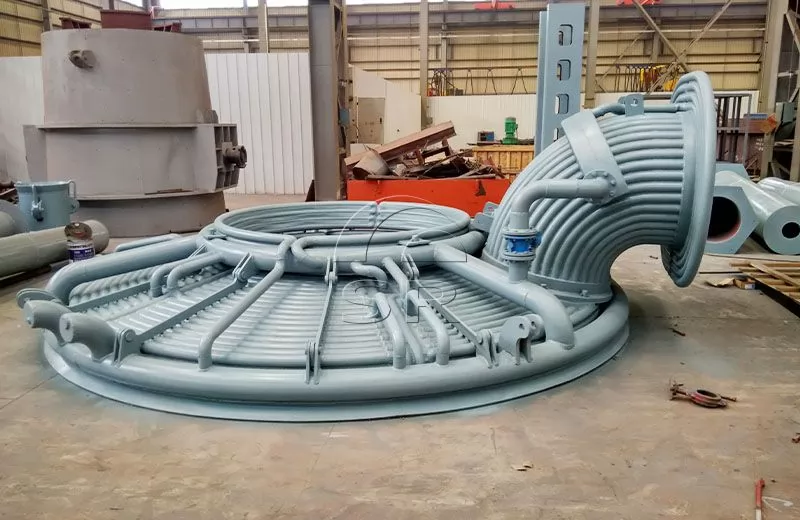
Generally, the furnace cover of the electric arc furnace adopts the tubular water-cooled closed tube furnace cover structure.
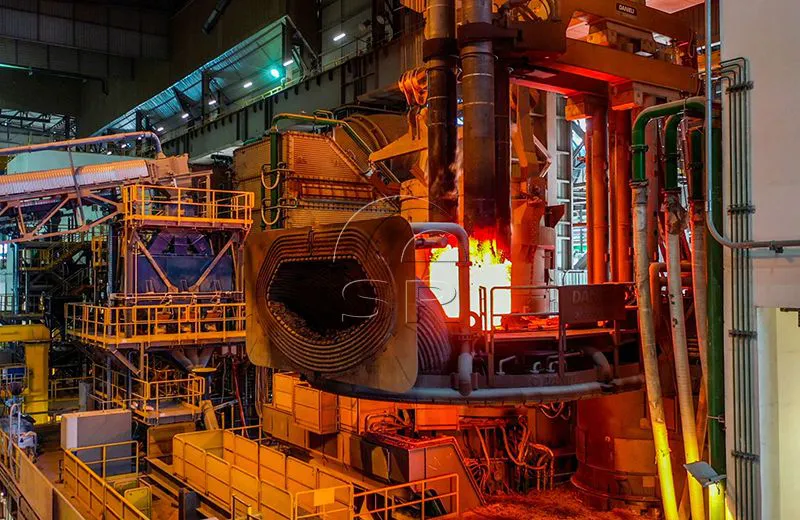
The electrode lifting mechanism of electric arc furnace is composed of conductive cross arm and electrode column device.
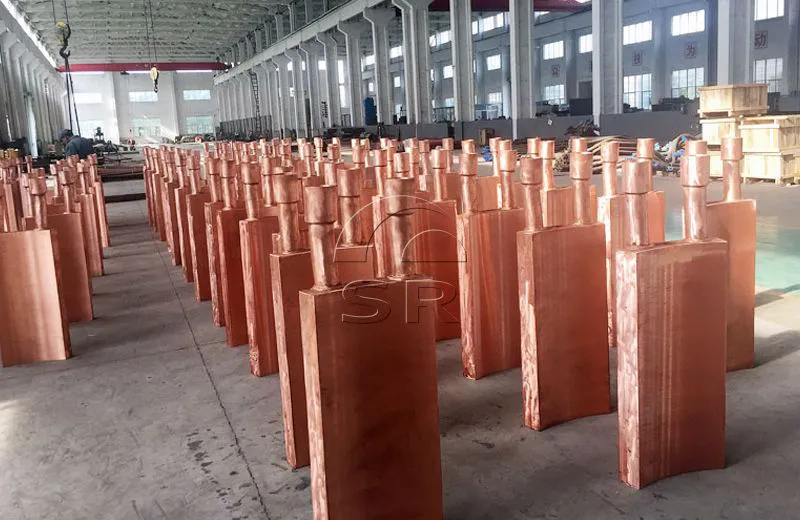
Forged copper tile is one of the main accessories in submerged arc furnace (silicon metal furnace, calcium carbide furnace and iron alloy furnace). It generates heat energy due to passing through large current at high temperature, and is easy to be damaged due to poor working environment.
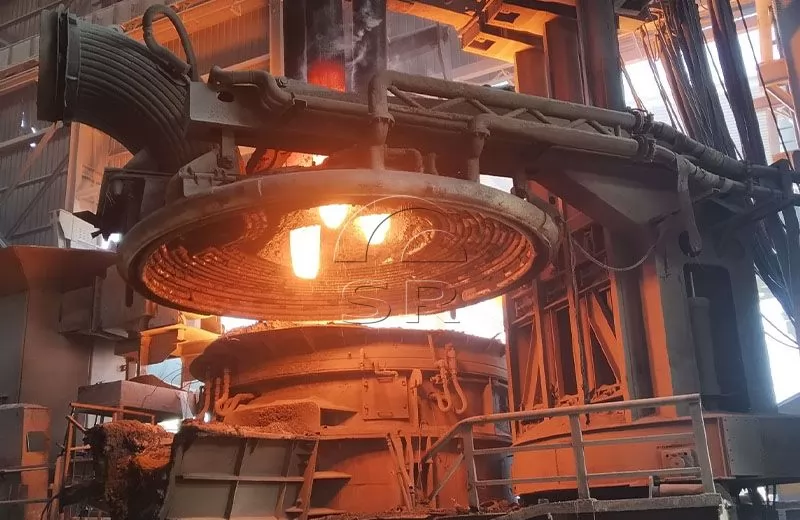
The furnace cover lifting and rotating device consists of a furnace cover lifting mechanism, a rotating mechanism and a rotating frame.
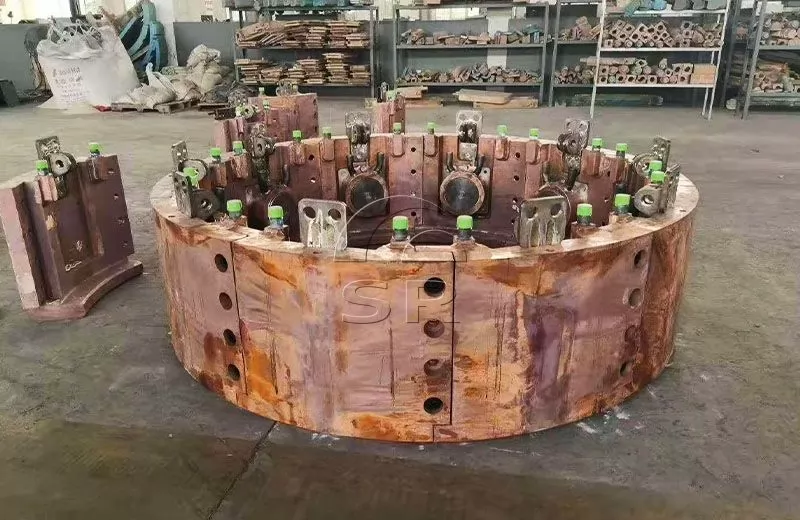
Submerged arc furnace pressure ring is used to monitor the change of air pressure in the furnace in real time, and adjust the air pressure automatically or manually according to the preset parameters to ensure the stability of air pressure in the furnace
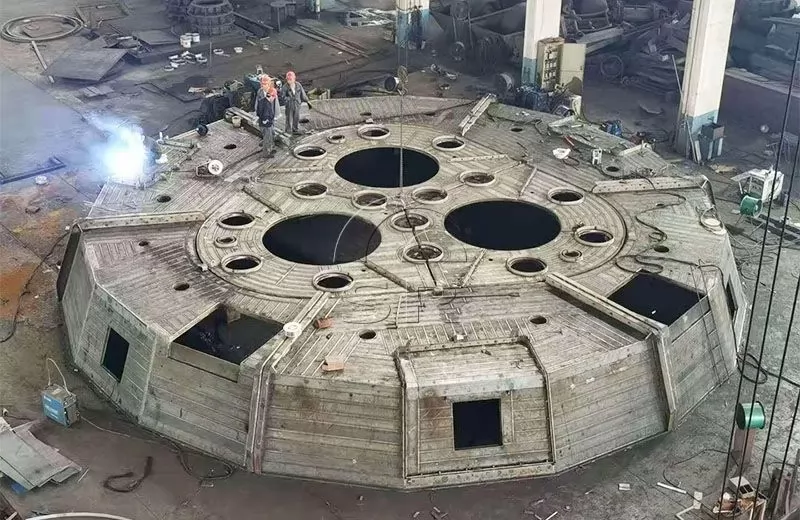
Submerged arc furnace water-cooled Roof is an important part of submerged arc furnace (also known as electric arc furnace, calcium carbide furnace or mining furnace), which is mainly used to close the top of furnace body and bear the high temperature and pressure in the furnace.
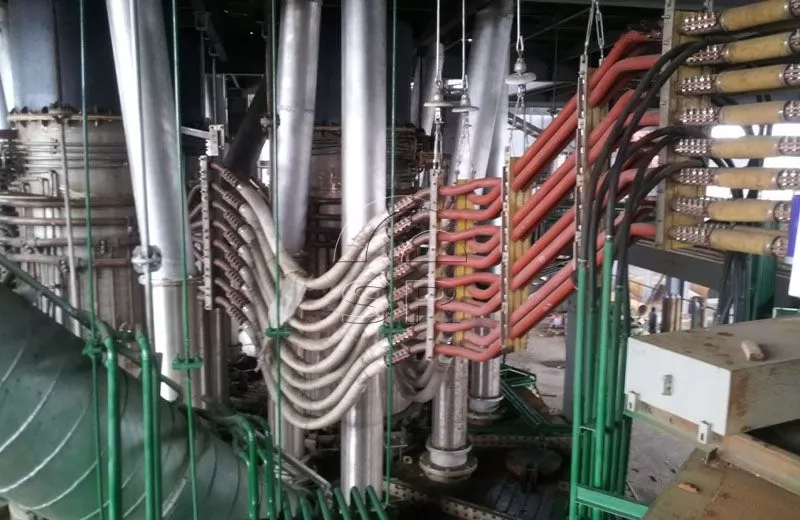
Short network bus systems), also known as high current line, refers to the general term of the carrier fluid from the secondary outlet terminal of the transformer to the electrode (including the electrode).
Navigation
E-mail: anna@srfurnace.com
Tel: +86 159 2955 5868
WhatsApp: +86 159 2955 5868
Add:
Room 422, 4th Floor, Building D, No. 5, Phase I, Fengdong Free Trade Industrial Park, Xixian New District, Shaanxi Province