Dec. 19, 2024
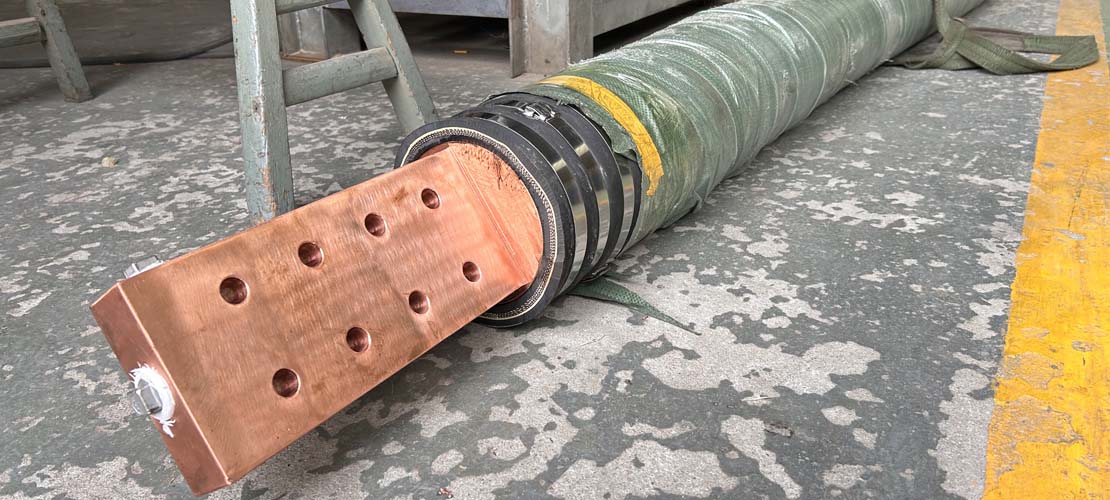
A water-cooled cable is a device that cools the cable by circulating water. It is mainly used for cooling high-power equipment. A water-cooled cable contains an inner conductor and an outer insulation layer, and water flows through the water pipes in it for cooling.
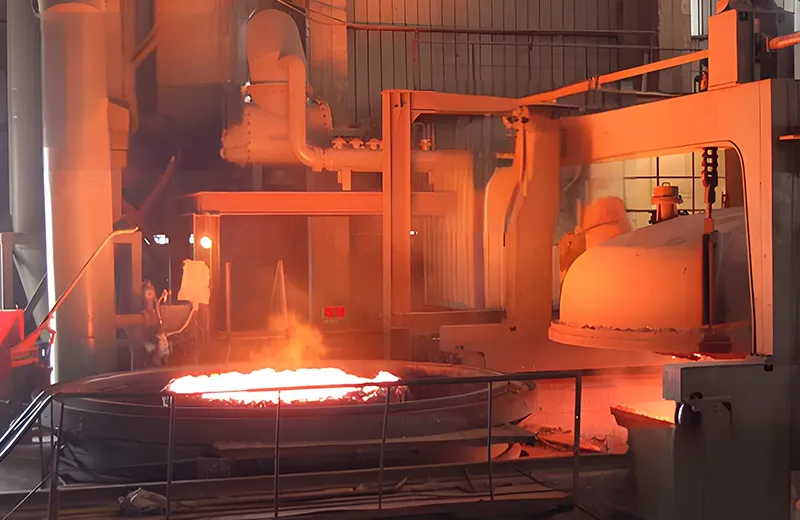
Water-cooled cables are mainly used for high-power electrical equipment, such as equipment with high-power motors or inverters, common electric arc furnaces, and welding machines. They are also used in petrochemical, metallurgical, pharmaceutical, and other high-temperature industries. EAF/SAF Water-cooled cables can protect equipment from damage under high loads and extreme working conditions.
Many standards apply to the design and installation of water-cooled cables at home and abroad. These standards are formulated to ensure water-cooled cables' safety, reliability, and stability.
The International Organization for Standardization (ISO) has introduced a series of standards applicable to water-cooled cables. For example, ISO 21678:2018 "Liquid-cooled Cable Systems" provides a detailed specification to guide the design, installation and operation of water-cooled cables. The standard covers many aspects, including transmission parameters, structure of water-cooled cables, design and definition of waterways, etc.
In addition, there are other international organizations that provide standards for water-cooled cables, such as the European Organization for Standardization (CENELEC), the American National Standards Institute (ANSI), and the International Electrotechnical Commission (IEC).
The China Organization for Standardization (GB/T) also has specifications for water-cooled cables in standards such as "Power Cables" or "Cables for Power Supply and Utilization Equipment". For example, GB/T 5584 "Copper Core Butter Paper Insulated Power Cables" and GB/T 7673 "Cross-linked Polyethylene Insulated Power Cables and Accessories". These standards ensure that water-cooled cables in China meet international standards and are scientific, reasonable, and operational.
Water-cooled cable standards help ensure the quality and standards of the design, production, testing, transportation, and installation of water-cooled cables. First-class water-cooled cables should meet the standards and be able to fully serve the needs of users. Formal standard organizations can guide water-cooled cable manufacturers to develop more advanced and efficient products.
|
|
An electrical conductor (like copper) has resistance. When a massive current (thousands to tens of thousands of amperes) flows through it, it generates a colossal amount of heat due to Joule heating (I²R loss). Standard air-cooled cables would melt or catch fire at such loads. The solution: Actively and continuously remove the heat as fast as it's generated. Water is 4,000 times more effective at removing heat than air, making it the perfect cooling medium.
A typical water-cooled cable (the most common flexible type) is a hybrid of an electrical conductor and a cooling pipe.
•Conductor: Thousands of fine, bare copper strands braided or twisted together. This makes the cable extremely flexible.
•Water Jacket/Cooling Channel: The copper strands are contained inside a sealed, flexible, insulated hose (often made of EPDM rubber or similar). This hose forms the water channel.
•Water Terminals: At each end are specially designed cable terminals (flanges). They have two critical functions:
•Electrical Connection: A solid copper plate or ring to bolt the cable to the power source (e.g., transformer) and the load (e.g., furnace electrode).
•Hydraulic Connection: Inlet and outlet ports to connect to the external cooling water system. Inside, a seal ensures water flows over the copper strands but never leaks into the electrical connection area.
Imagine a closed-loop system:
1. Current Entry: Massive electric current enters the cable through the end terminal and flows through the copper strands.
2. Heat Generation: The electrical resistance of the copper instantly converts a portion of the electrical energy into thermal energy (heat). The conductor’s temperature starts to rise rapidly.
3. Active Heat Exchange: Simultaneously, pressurized, cool water (e.g., 30°C / 86°F) is pumped into the cable’s inlet. This water flows directly over and between the thousands of copper strands, making intimate contact.
•Heat from the hot copper conductor is conducted into the cooler water.
•The now-heated water is carried away by the flow.
4.Heat Removal: The warm water (e.g., 45°C / 113°F) exits the cable through the outlet and travels to an external cooling system. This is typically a heat exchanger (like a radiator or cooling tower) that dumps the heat into the atmosphere or a plant cooling circuit.
5.Closed Loop: The now-cooled water is pumped back into the cable inlet, and the cycle repeats continuously.
In essence: The heat is "washed away" by the flowing water before it can accumulate and damage the cable.
•Extreme Current Density: It can carry 10-20 times more current than an air-cooled cable of the same cross-sectional area. This saves massive amounts of expensive copper and allows for more compact designs.
•Controlled Temperature: Keeps the conductor at a safe, low operating temperature (typically 40-60°C), preventing insulation failure, oxidation, and thermal fatigue.
•Enables Modern Industry: Makes processes like electric arc furnace (EAF) steelmaking possible. EAFs draw over 50,000 amperes, and the cables connecting to the moving electrodes mustbe flexible.
•Efficiency & Longevity: By managing heat, it reduces energy losses and significantly extends the cable’s service life.
A water-cooled cable is the central component of a larger system:
•Pumps: To maintain constant water flow.
•Cooling Unit/Heat Exchanger: To remove heat from the circulating water (e.g., cooling tower, chiller, dry cooler).
•Deionization System: Often uses deionized water to prevent mineral scaling inside the cable and, crucially, to keep the water’s electrical conductivity very low. This prevents the cooling water itself from becoming a stray electrical path.
•Filters, Flow & Temperature Sensors: For system monitoring and protection (e.g., to shut down power if water flow stops).
A water-cooled cable works by turning an electrical conductor into a heat exchanger. It uses continuously flowing water to actively and efficiently remove the immense waste heat generated by ultra-high currents, allowing it to perform tasks impossible for any standard cable.
Water-cooled cables are specialized components designed to carry extremely high currents by actively removing heat. They are primarily categorized by their conductor design and application flexibility. Here’s a clear breakdown of the main types.
This is the classic "water-cooled cable" used where movement is required.
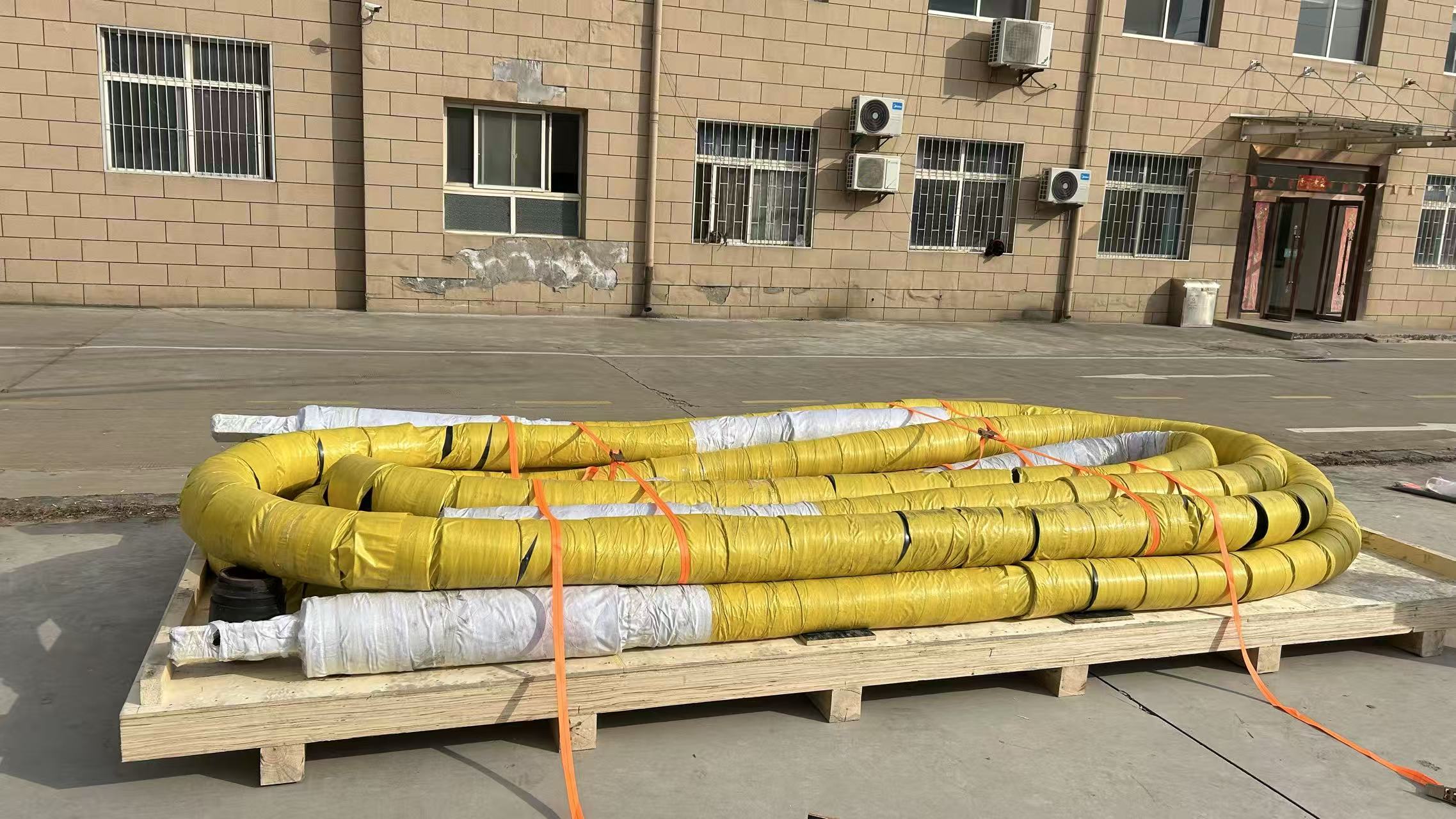
•Structure: Thousands of fine, bare copper strands are bundled or braided into a flexible conductor, which is then enclosed inside a seamless, heavy-duty rubber or plastic hose. Water flows directly over the strands.
•Key Feature: High flexibility. It can be bent and moved repeatedly.
•Typical Use: Electric Arc Furnace (EAF) and Ladle Furnace electrode arms, where the cable must move with the oscillating or raising/lowering electrode.
•Visual: Looks like a large, sturdy hose with copper lugs on the ends.
Used for fixed, high-current busbar runs.
•Structure: The conductor itself is a solid copper or aluminum pipe. Cooling water flows through the hollow center of the pipe. Often used in pairs (for supply and return) with insulating supports.
•Key Feature: High current capacity, rigid structure, lower impedance. More efficient for high-frequency applications due to better use of the skin effect.
•Typical Use: Fixed installations in electrolysis plants (e.g., aluminum smelting), large DC power supplies, and particle accelerator magnet circuits.
•Visual: Looks like a plumber's copper pipe run, with electrical insulators.
A hybrid between a hose cable and a solid busbar.
•Structure: Multiple flat, thin copper strips (laminations) are stacked and sometimes braided for flexibility. A water channel is integrated, either as a central hose between the strips or by making the strips themselves hollow.
•Key Feature: Good balance of flexibility and high current capacity in a flat profile. Lower inductance than round hose cables.
•Typical Use: Connections in high-power induction furnaces, large welders, and semiconductor manufacturing equipment where a low-profile, flexible connection is needed.
For applications requiring controlled impedance and minimal external magnetic fields.
•Structure: Consists of a central conductor (cooled pipe), an insulating dielectric, and an outer concentric conductor (also cooled). Water flows in the annulus between them or through both conductors.
•Key Feature: Very low inductance, minimal external magnetic radiation. Provides excellent shielding.
•Typical Use: High-frequency (RF) plasma generators, broadcasting transmitters, and specialized research equipment.
| Type | Description | Advantage |
| Single-Pass (Parallel Flow) | One hose carries water from the source to the load. | Simple design. |
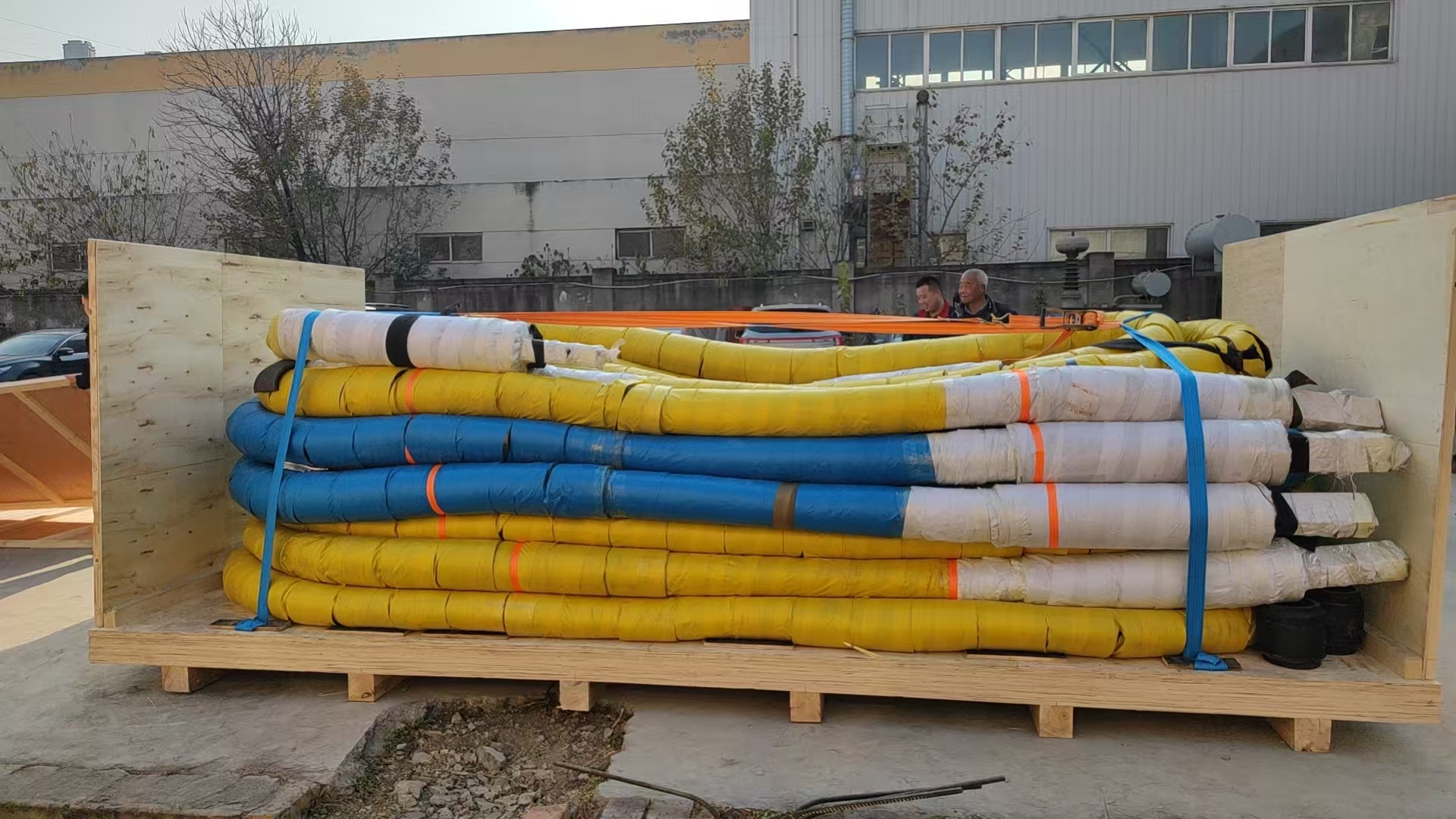
| Return-Flow (U-Flow) | A pair of cables is used: one "go" and one "return." The water flows to the load through one and returns through the other. | Both cables are cooled, balancing the system temperature. Common in furnace applications. |
| Series Flow | Multiple devices or cable sections are cooled in sequence by the same water loop. | Uses less plumbing, but the last section in the series receives warmer water. |
| Internal Baffle / Turbulator | The hose contains internal baffles or a twisted tape to create turbulent water flow. | Turbulent flow breaks up the boundary layer, dramatically improving heat transfer efficiency compared to laminar flow. |
Choosing the right type depends on:
1. Current & Voltage: Required amperage (AC/DC) and operating voltage.
2.Flexibility Requirement: Does the connection need to move (EAF) or is it fixed?
3.Frequency (AC only): High frequency increases "skin effect," favoring tubular or laminated designs.
4.Space Constraints: Braided or tubular designs offer different form factors.
5.Cooling System: Available water pressure, flow rate, and quality (deionized water is almost always required to prevent short circuits and scaling).
Quick Comparison Table of the water-cooled cables:
| Type | Flexibility | Typical Current Capacity | Key Application |
| Flexible Hose Cable | Very High | Very High (5kA - 100kA+) | Moving connections (Arc furnaces) |
| Tubular Busbar | None (Rigid) | Extremely High (10kA - 250kA+) | Fixed busbar runs (Electrolysis, smelting) |
| Water-Cooled Braid | Medium-High | High (3kA - 50kA) | Flexible, low-inductance connections |
| Coaxial Cable | Low | Medium-High | RF/High-Frequency applications |
The Flexible Hose Cable is the workhorse for heavy industry with moving parts, while Tubular Busbars handle the highest currents in fixed installations. The other types address specific needs like form factor, inductance, or high frequency.
• Efficient cooling: Water as a cooling medium has high heat capacity and thermal conductivity, and can take away a lot of heat in a short time.
• Stability: The cooling system of water-cooled cables runs smoothly, and the flow, pressure, and temperature of water can be controlled to ensure the stable operation of the equipment.
• Environmental protection: Compared with other cooling methods, water-cooled cables have less environmental impact • Space saving: The design of water-cooled cables requires a smaller volume than airflow cooling, thus saving space.
• Difficulty in maintenance: Water-cooled cables need to be equipped with water cooling systems, pipes, cooling towers, and other accessories, and the maintenance difficulty and cost are relatively large.
• Energy consumption: Water-cooled cables need to be cooled by water pumps and other equipment, which increases energy consumption.
As a safe and efficient cooling method, water-cooled cables have their advantages in terms of cleanliness, energy saving, efficiency, and scalability. During use, attention should be paid to the compliance and maintenance of water-cooled cable standards.
Latest News
Latest Products
Customized metallurgical machinery and equipment range: Electric Arc Furnace, Submerged Arc Furnace, LF Refining Furnace, Vacuum Furnace, Induction Furnace, Dust Remove System, Water Treatment Equipment, etc. Providing the most advanced equipment integration services, metallurgical equipment can be customized according to different needs of customers, and production capacity can be adjusted according to customer requirements.
Electric Arc Furnace
Submerged Arc Furnace
LF Refining Furnace
VD / VOD Vacuum Refining Furnace
Induction Furnace
Furnace Accessories
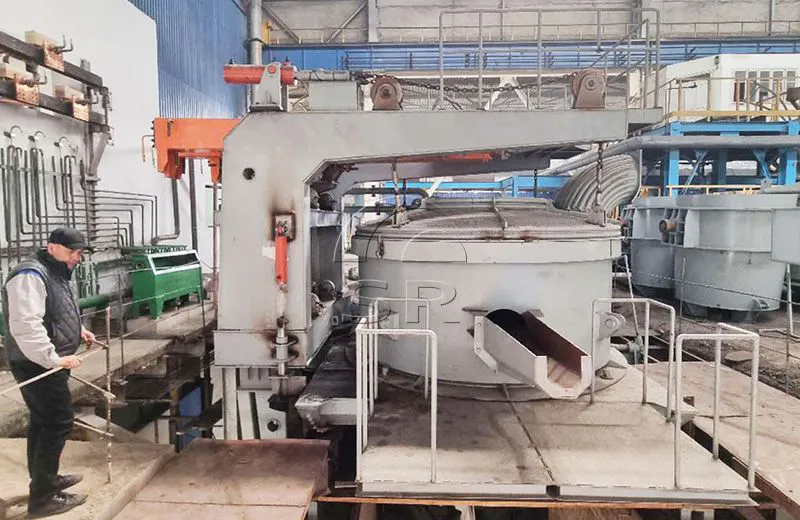
The 5 ton electric arc furnace for steel-making is a special purpose equipment that makes ordinary steel, quality carbon steel, alloy steel and non-corrosive steel with electric arc as heat source and scrap steel (iron) as raw material.
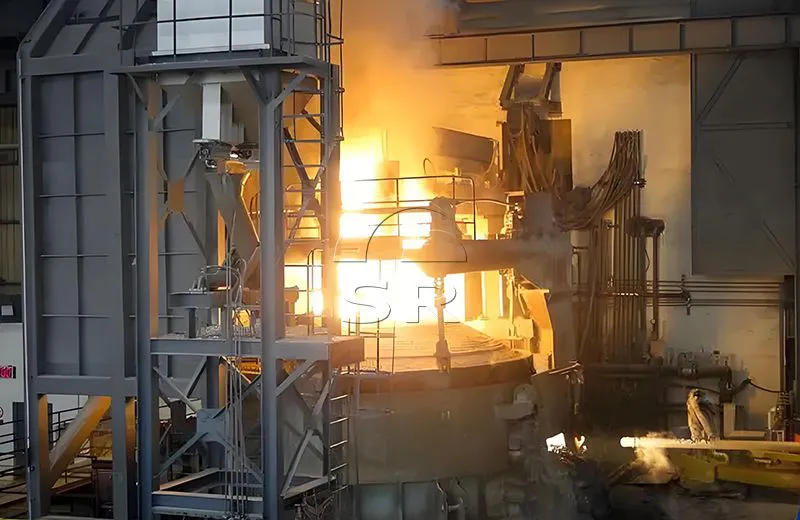
15-ton electric arc furnace is used for the short-process steelmaking process, using 100% scrap steel or scrap steel + molten iron (pig iron), or scrap steel + sponge iron (DRI) as raw materials for steelmaking.
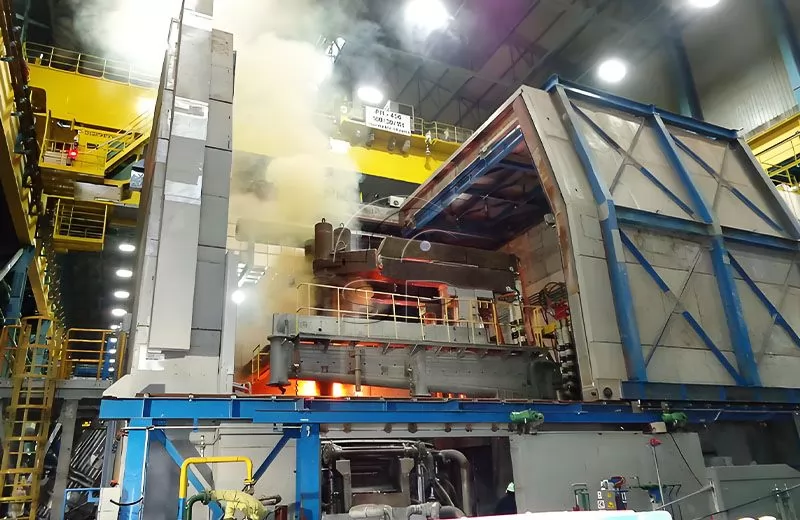
The 30-ton AC electric arc furnace is used to melt scrap steel to produce steel. Electrical energy is used to melt scrap steel. An arc forms between the charged material and the electrode.
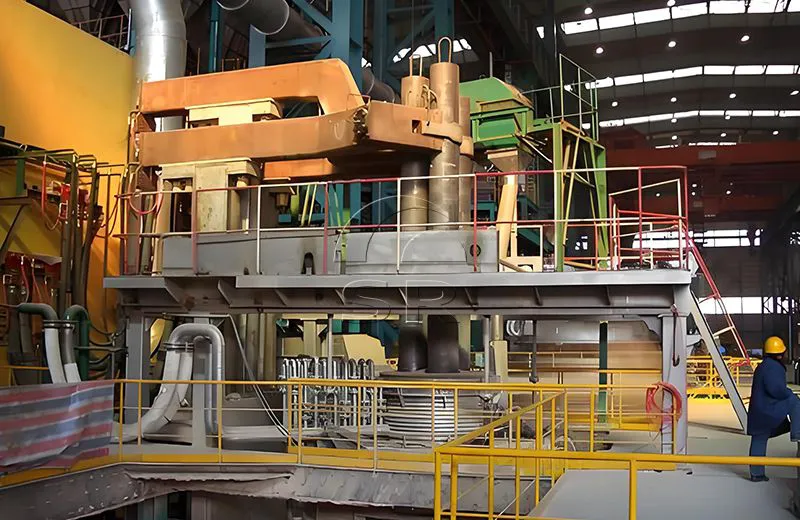
30 Ton electric arc furnace is used for steelmaking short process smelting, using 100% scrap steel or scrap steel + molten iron (pig iron), or scrap steel + sponge iron (DRI) as raw materials for steelmaking.
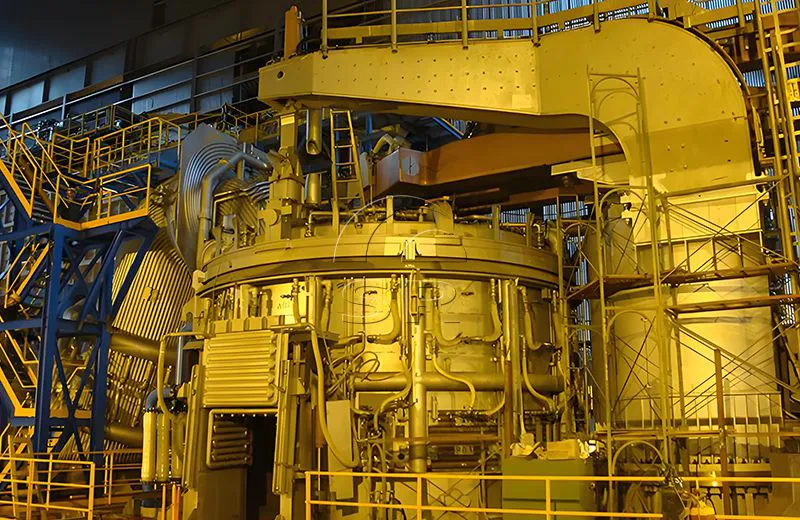
The 50-ton ultra-high power electric arc furnace (50TUPH EAF) adopts ultra-high power, high impedance technology, bottom tapping technology (ETB), furnace wall oxygen oil burner and furnace door carbon-oxygen gun technology.
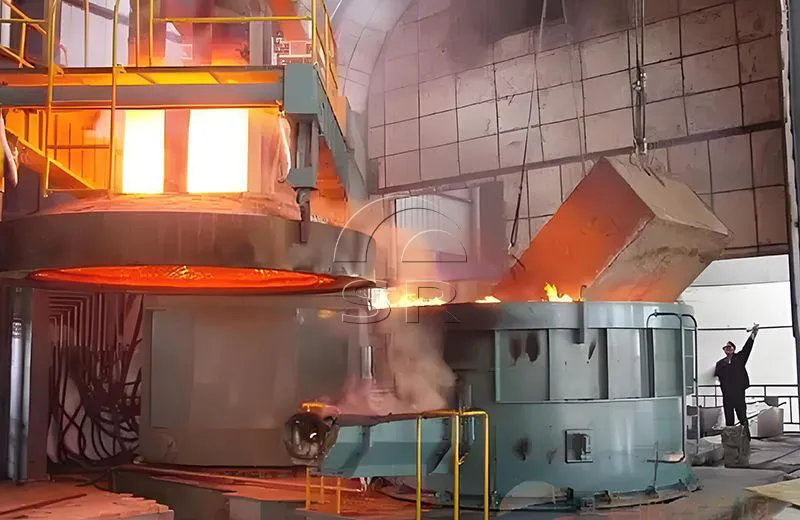
DC electric arc furnace is an electric arc furnace supplying electric energy with DC power supply. There is only one electrode on the top of the DC arc furnace, which is the negative electrode, and the bottom electrode is the positive electrode.
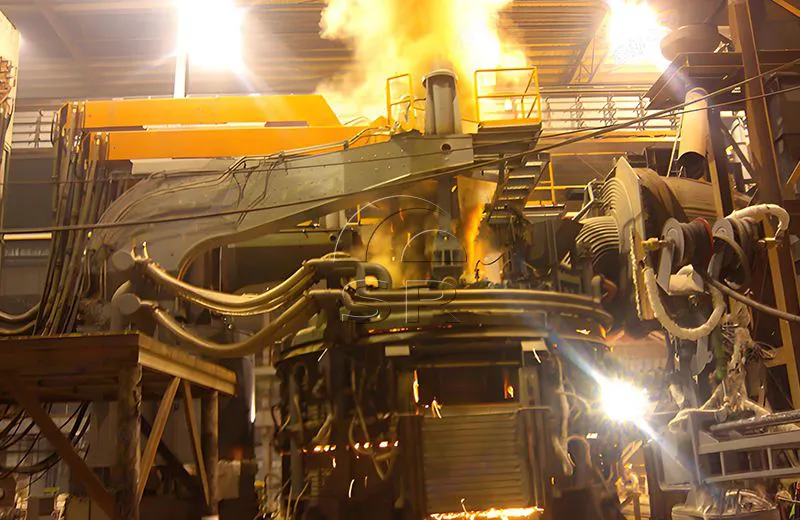
Electric arc furnaces are used to melt scrap steel for steel production. Electrical energy is used to melt scrap steel. An arc forms between the charged material and the electrode. The heat generated by the arc melts the scrap.
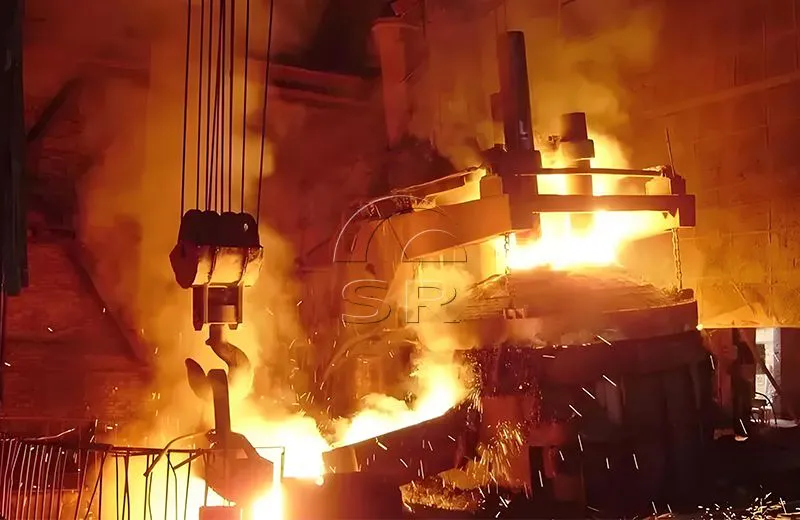
Electric arc furnace steel making is a steelmaking method that uses the thermal effect of electric arc to heat the charge for melting.
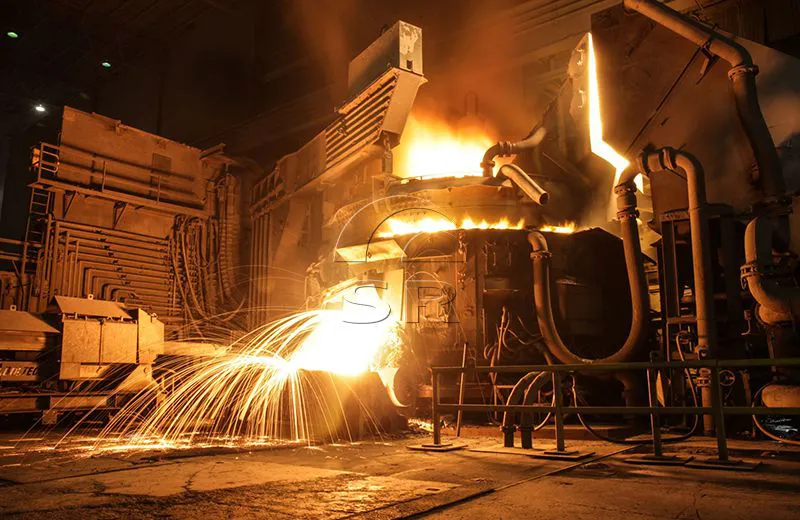
Ultra-high power electric arc furnace mainly changes the arc characteristics of high voltage and long arc to the arc characteristics of high current, low voltage and short arc
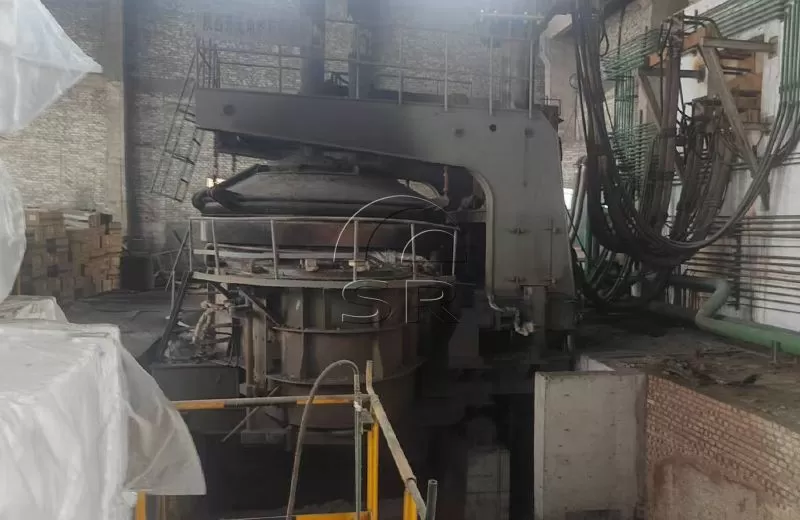
1 ton electric arc furnace is used for melting steel and titanium scrap metal. The principle of electric arc furnace is based on the generation of direct current, which converts electrical energy into heat energy through electrodes to melt the metal.
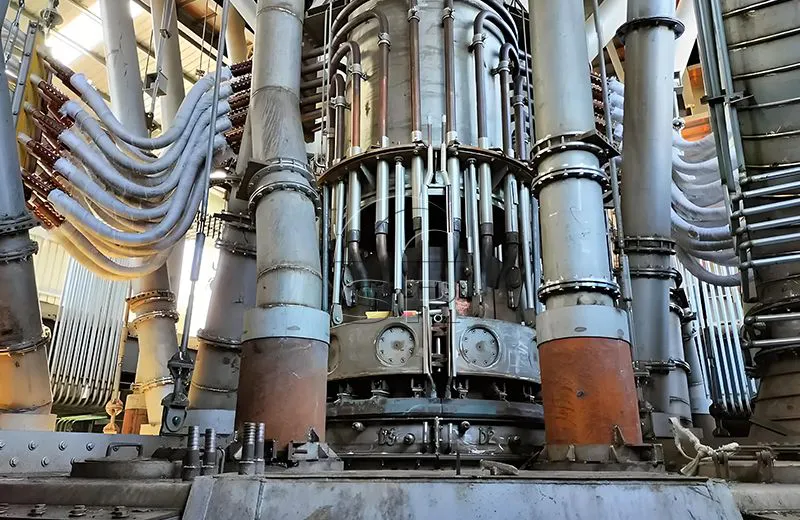
The closed pig iron furnace (submerged arc furnace iron making) is a non-blast furnace iron making method. Under the premise of guaranteeing the power supply, it is easy to solve the problem by using the reducing agent required by the submerged arc furnace iron making.
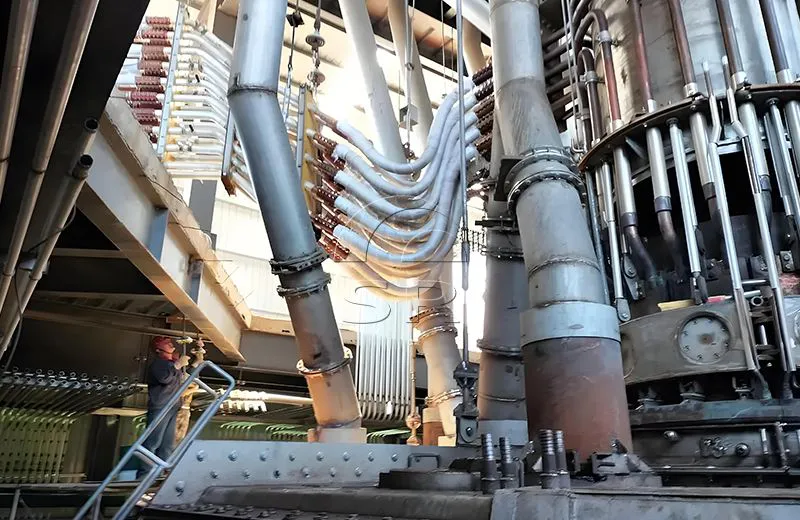
The main mechanical device design of Sanui ferroalloy refining furnace combines China's national conditions and draws on international advanced technologies such as Demark and Pyremate.
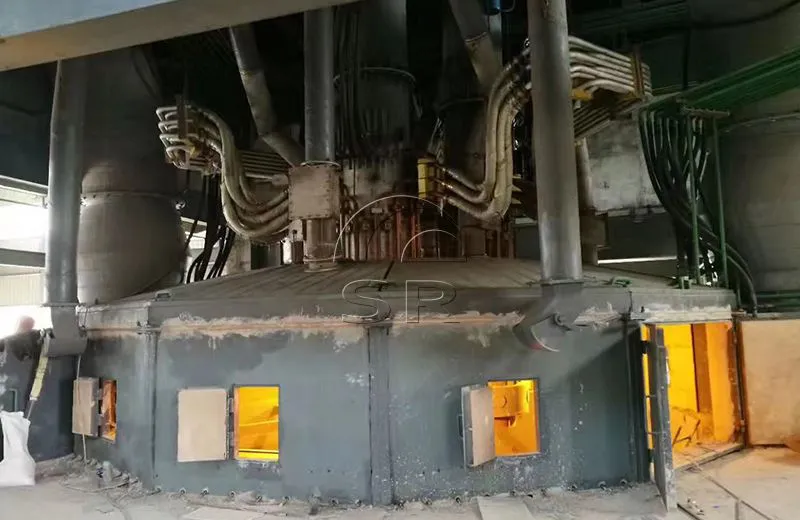
The Ferronickel submerged arc furnace is a special submerged arc furnace used for smelting nickel-iron alloy. Its main function is to add nickel ore, carbonaceous reducing agent (such as coke) and limestone and other raw materials into the furnace in a certain proportion
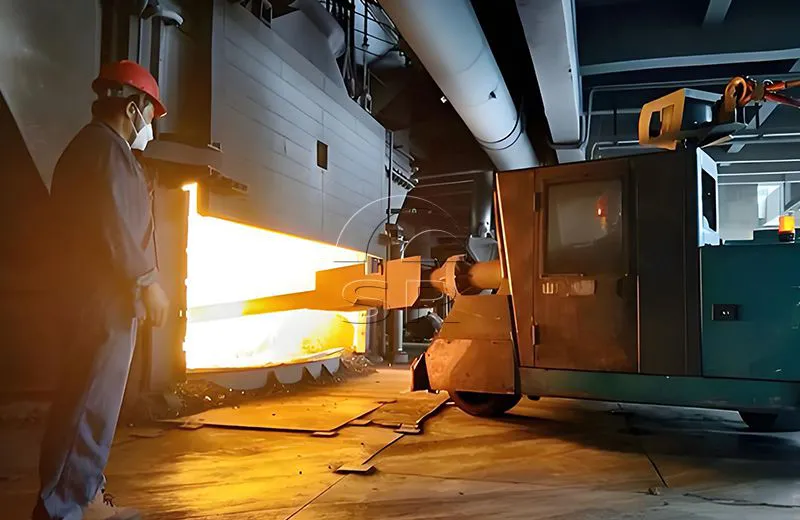
The main mechanical device design of Sanui ferrosilicon furnace combines China's national conditions and draws on international advanced technologies such as Demark and Pyremate.
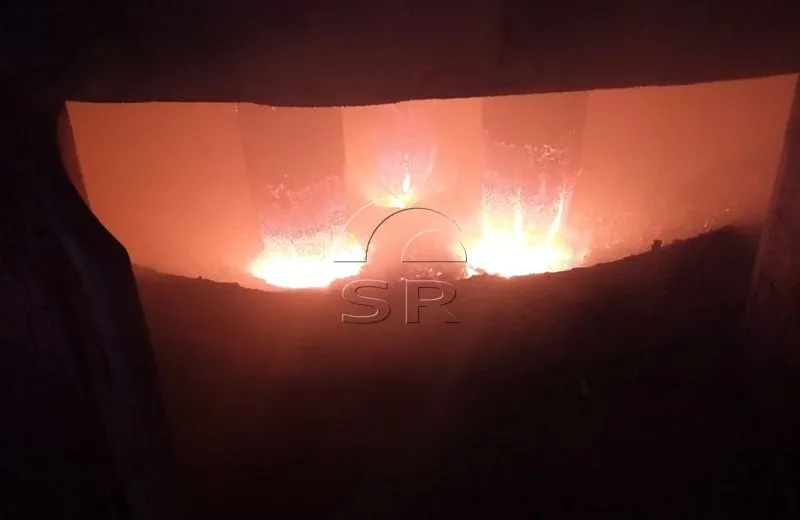
The main mechanical device design of Sanui high carbon ferrochrome furnace combines China's national conditions and draws on international advanced technologies such as Demark and Pyremate.
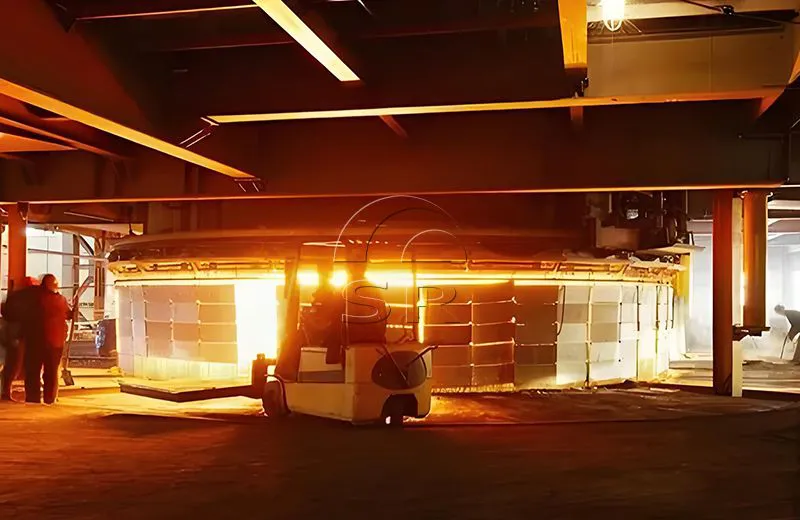
Industrial silicon submerged arc furnace is an important equipment in silicon ore processing, playing a key role in the silicon industry.
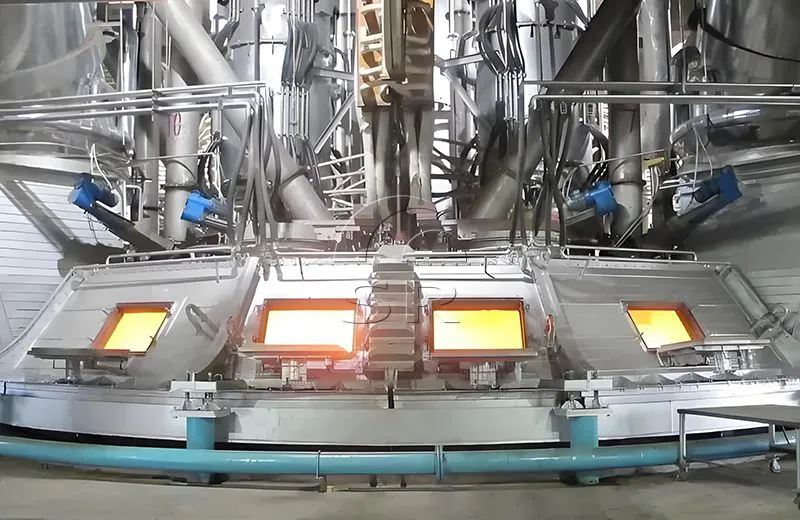
The manganese silicon alloy furnace is mainly used to smelt silicon-manganese alloy, which is an alloy containing silicon and manganese.
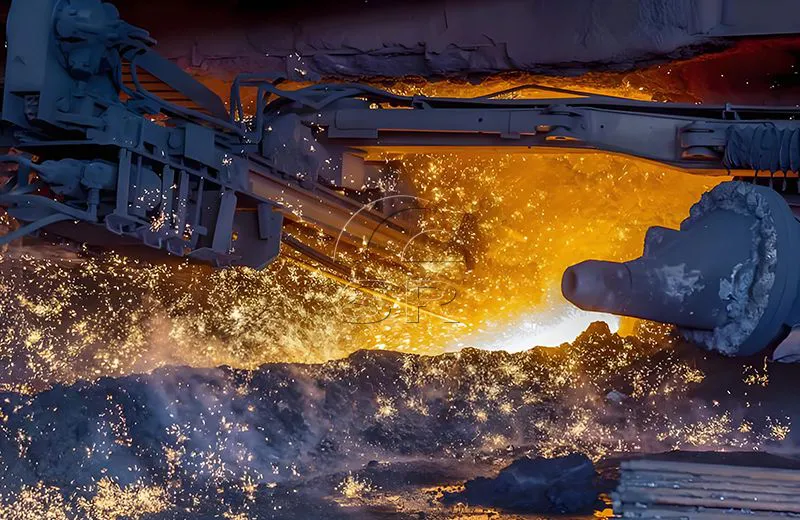
The design of the submerged arc furnace main mechanical device by Sanui is based on China's national conditions and draws on international advanced technologies such as Demark and Perlmutter.
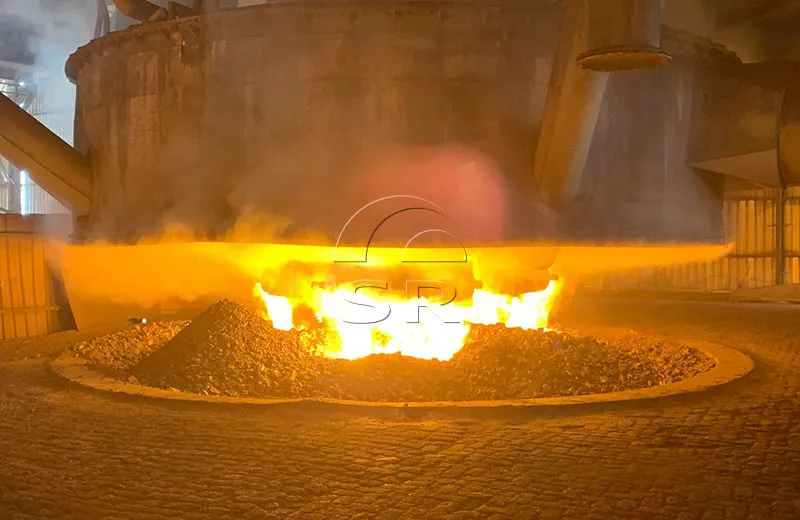
Submerged electric arc furnace is mainly used for reducing and smelting raw materials such as ore, carbonaceous reducing agent and solvent. It mainly produces ferroalloys such as ferrosilicon, ferromanganese, ferrochrome, ferrotungsten, silicon-manganese alloy, etc.
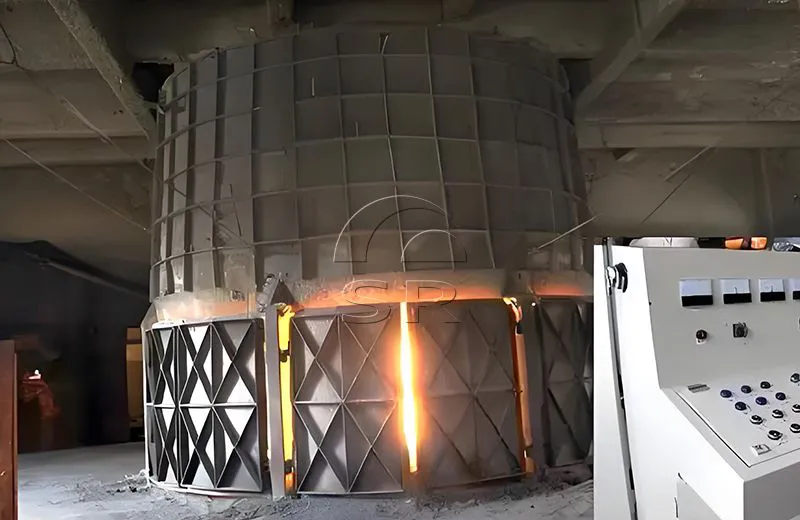
Titanium slag production adopts titanium slag electric furnace (circular furnace and rectangular furnace according to its shape) smelting process.
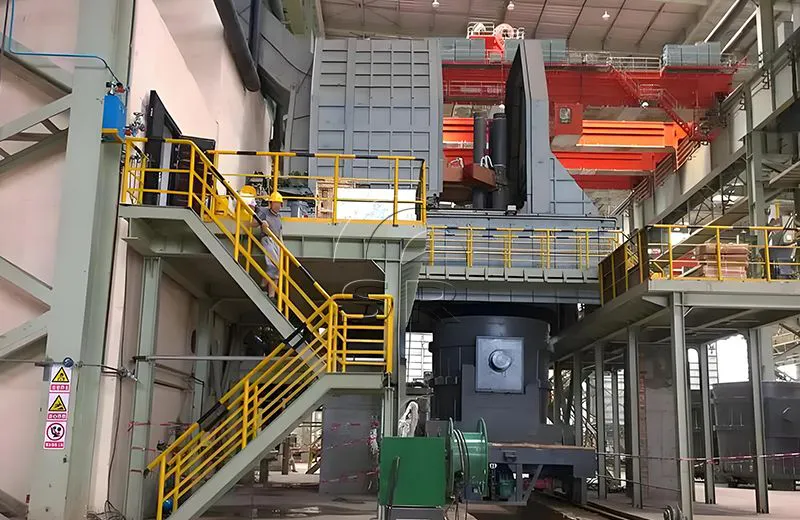
The LF 20 T ladle refining furnace has the functions of arc heating under normal pressure, argon blowing and stirring at the bottom of the ladle, and reducing slag making in the ladle.
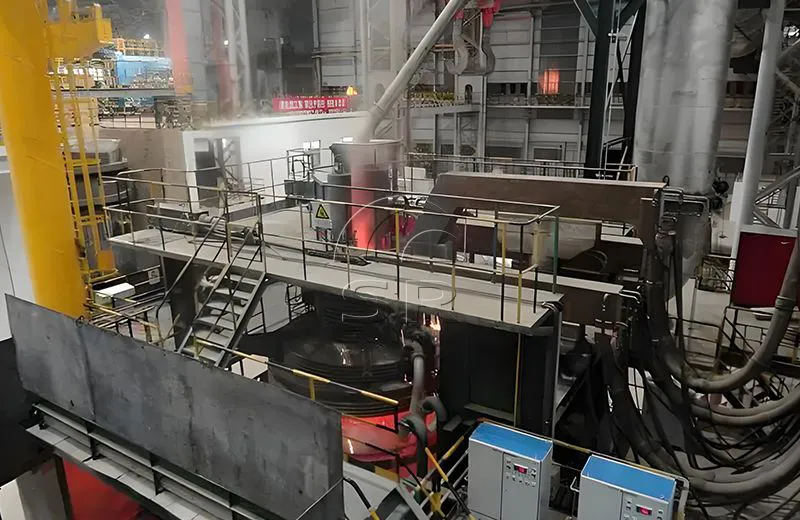
LF ladle refining furnace is a bottom-blown argon ladle furnace with three-phase submerged arc heating under normal pressure. It is a device for refining molten steel in a ladle.
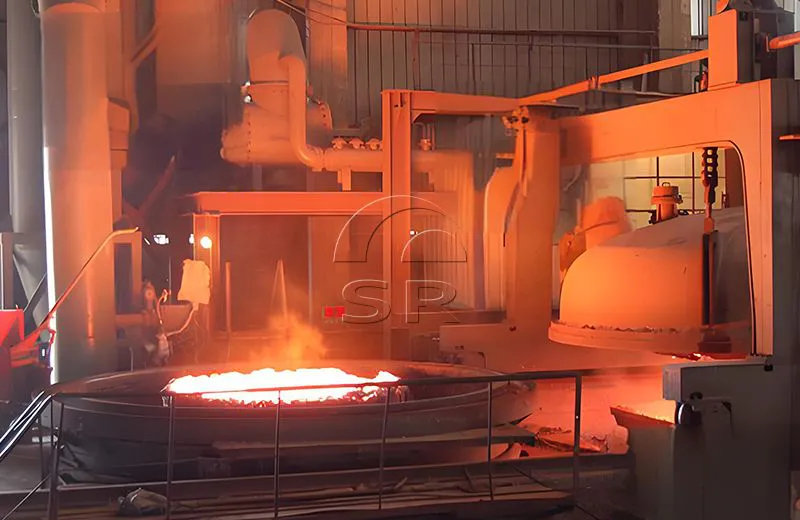
VD vacuum refining furnace is a commonly used refining process equipment, mainly used for deoxidation, impurity removal and other operations of molten steel, so as to obtain high purity, low impurity content of high quality steel.
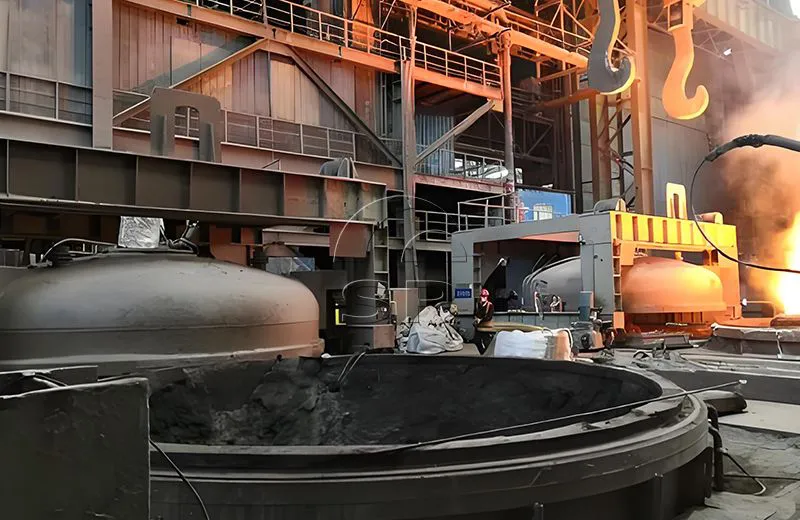
VOD vacuum refining furnace has multiple functions such as vacuum degassing, oxygen blowing decarburization, vacuum charging, argon blowing stirring, non-vacuum temperature measurement sampling, wire feeding, etc.
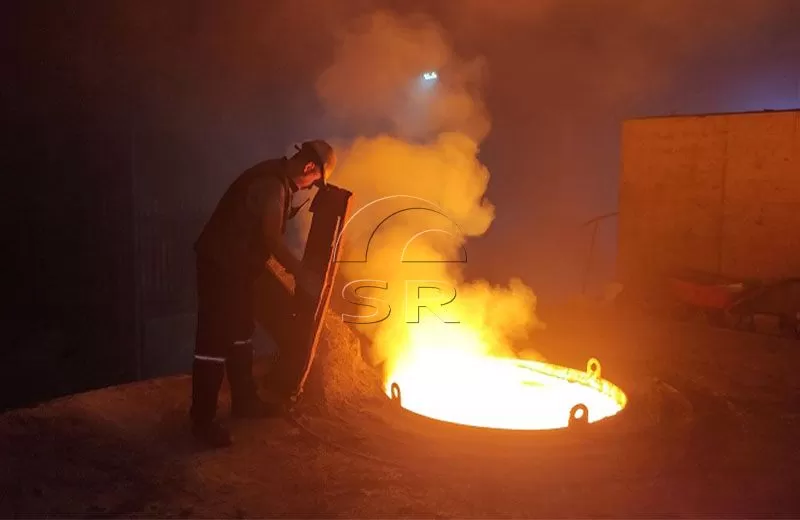
The cast steel melting induction furnace has outstanding advantages in heat penetration or melting soft magnetic alloys, high resistance alloys, platinum group alloys, heat-resistant, corrosion-resistant, wear-resistant alloys and pure metals.
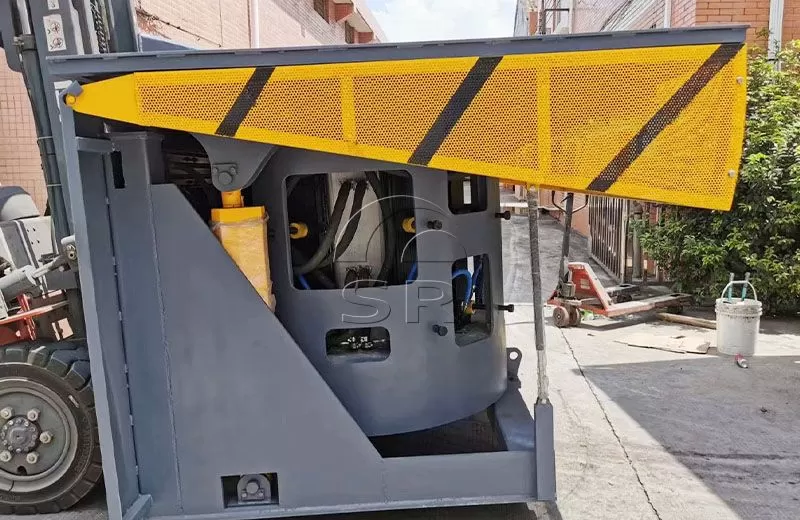
Metal silicon smelting furnace is a metal silicon medium frequency melting furnace, which consists of furnace body, water and electricity introduction system, furnace tilting device, etc. It has fast melting temperature rise, easy to control furnace temperature and high production efficiency.
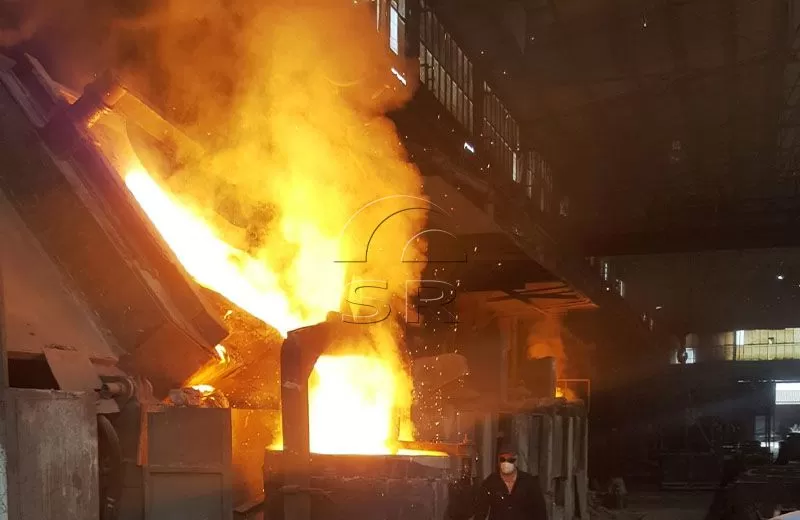
Medium frequency induction furnace mainly used for melting steel, alloy steel, special steel, stainless steel, and can also be used for melting and casting non-ferrous metals such as copper, aluminum, lead, zinc, etc. The customized range of induction furnaces sold by Sanrui ranges from 0.1 tons to 10 tons.
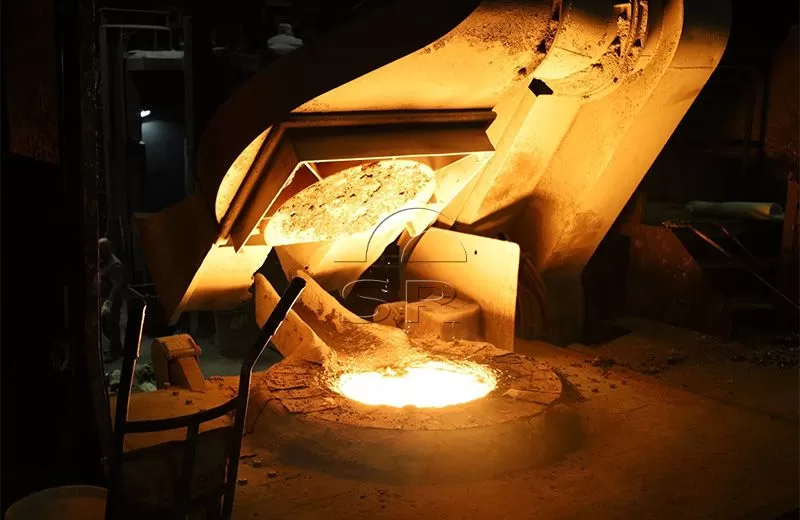
Medium frequency induction furnaces are mainly used for melting steel, alloy steel, special steel, stainless steel, and can also be used for melting and casting non-ferrous metals such as copper, aluminum, lead, and zinc.
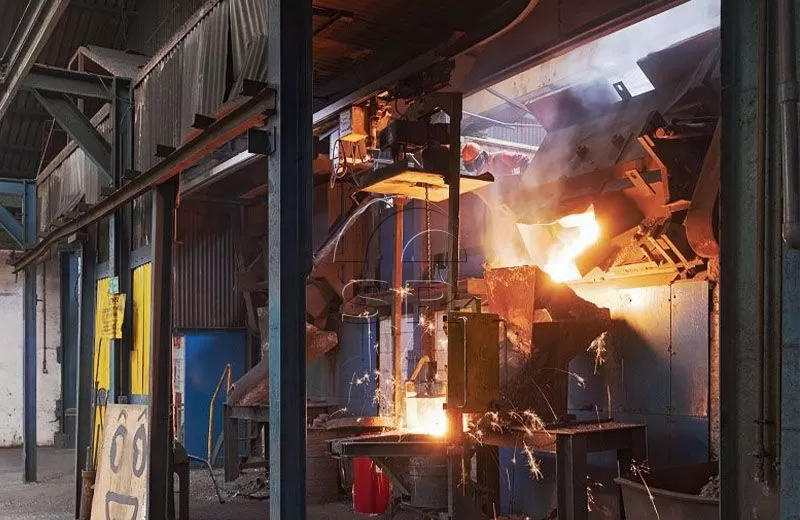
Medium frequency aluminum melting furnace is used for melting and heating aluminum, scrap aluminum, aluminum ingots, and aluminum alloys; The melting capacity ranges from 100KG to 3000KG.
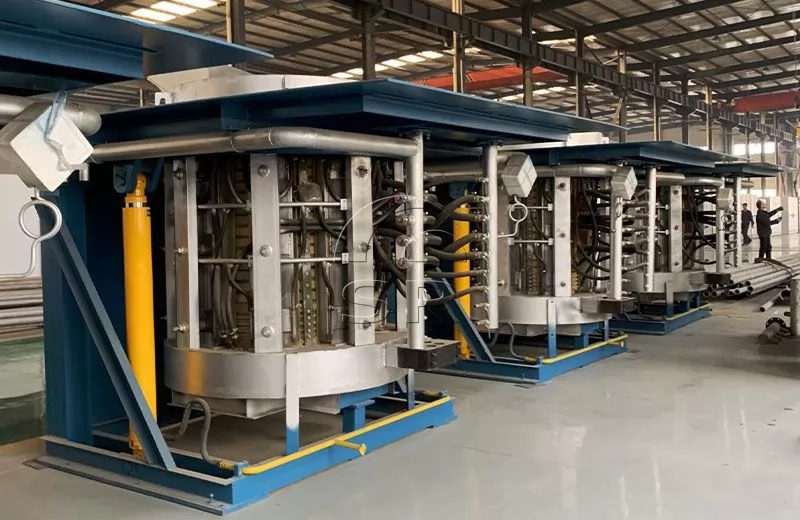
An induction furnace is an electric furnace that uses the induction electrothermal effect of the material to heat or melt the material. The main components of an induction furnace are sensors, furnace body, power supply, capacitors and control system.
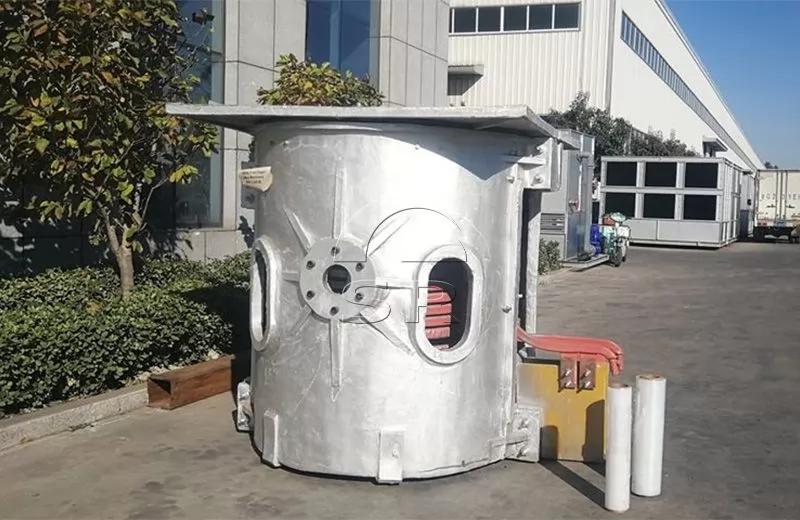
The 3-ton medium frequency coreless induction furnace adopts a 6-phase 12-pulse double rectifier control system. A 2000KVA special rectifier transformer is used for the 2000KW medium frequency power supply.
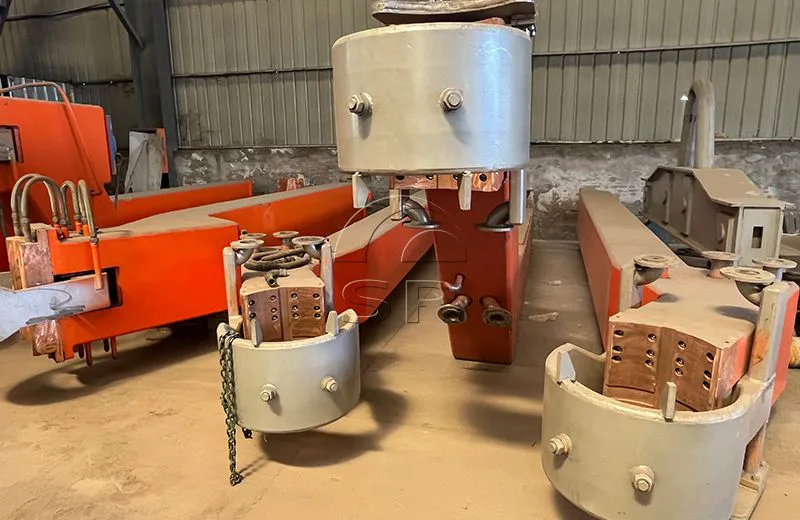
The conductive arm of an electric arc furnace (EAF) is primarily composed of the front electrode conductive arm holder, a water-cooled clamping ring, the arm body, and the rear conductive copper plate.
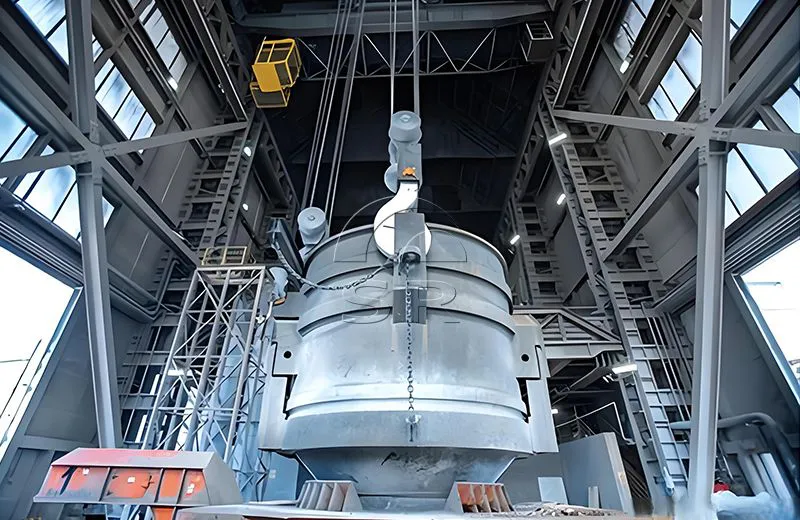
The scrap charging basket of the electric arc furnace is mainly used for loading and conveying raw materials such as scrap steel into the electric arc furnace for smelting.
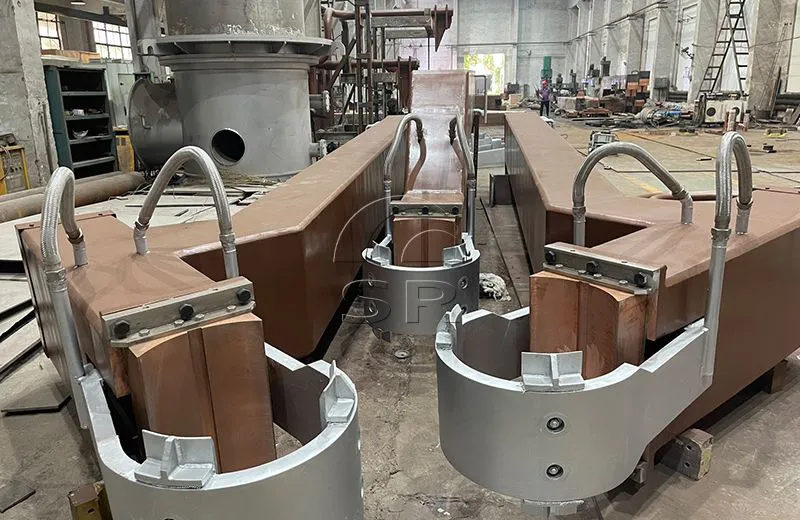
There are many insulation links between the EAF electrode holder and the conductive cross arm body, which greatly simplifies the cconductive cross arm structure and is a new type of electrode arm on the ultra-high power arc furnace.
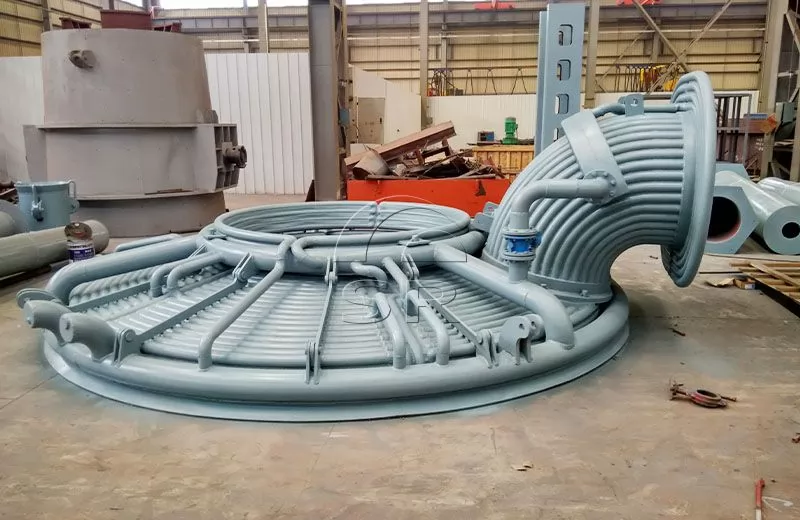
Generally, the furnace cover of the electric arc furnace adopts the tubular water-cooled closed tube furnace cover structure.
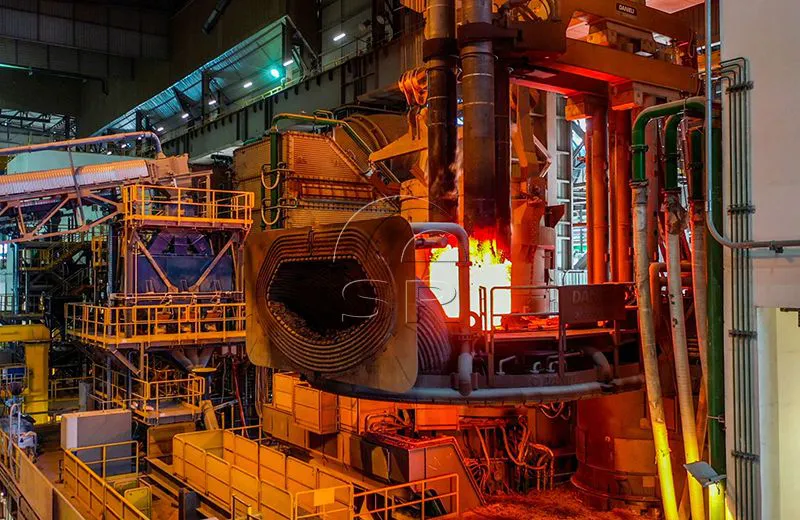
The electrode lifting mechanism of electric arc furnace is composed of conductive cross arm and electrode column device.
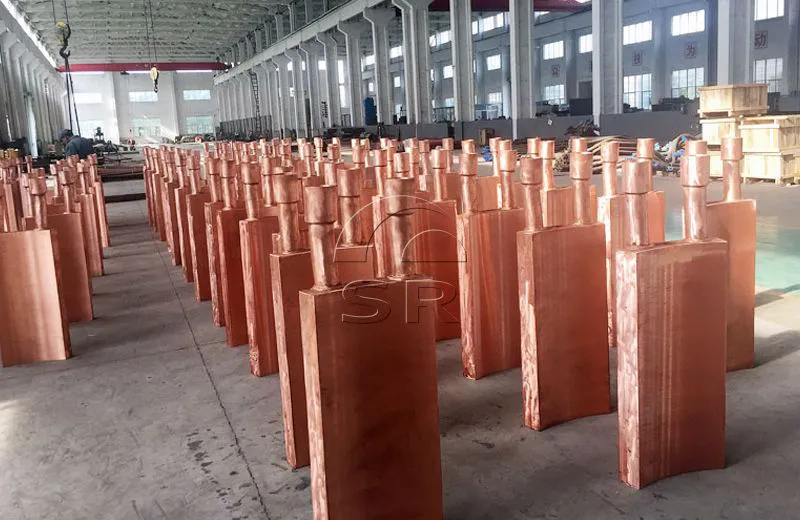
Forged copper tile is one of the main accessories in submerged arc furnace (silicon metal furnace, calcium carbide furnace and iron alloy furnace). It generates heat energy due to passing through large current at high temperature, and is easy to be damaged due to poor working environment.
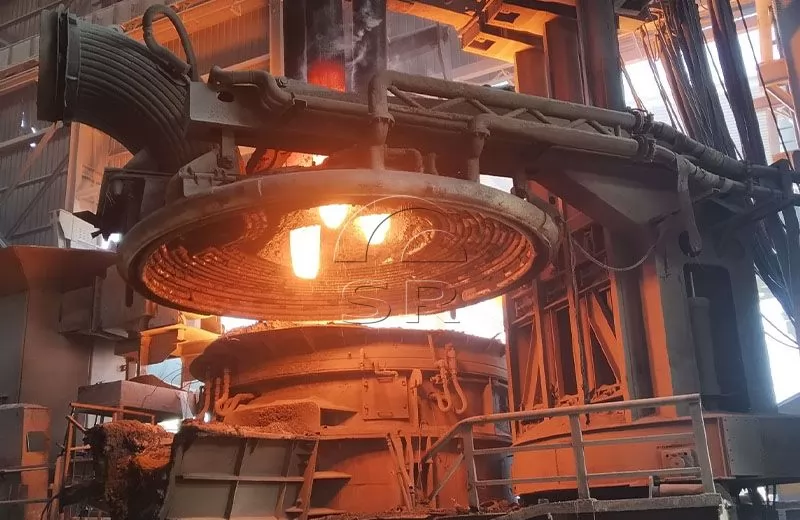
The furnace cover lifting and rotating device consists of a furnace cover lifting mechanism, a rotating mechanism and a rotating frame.
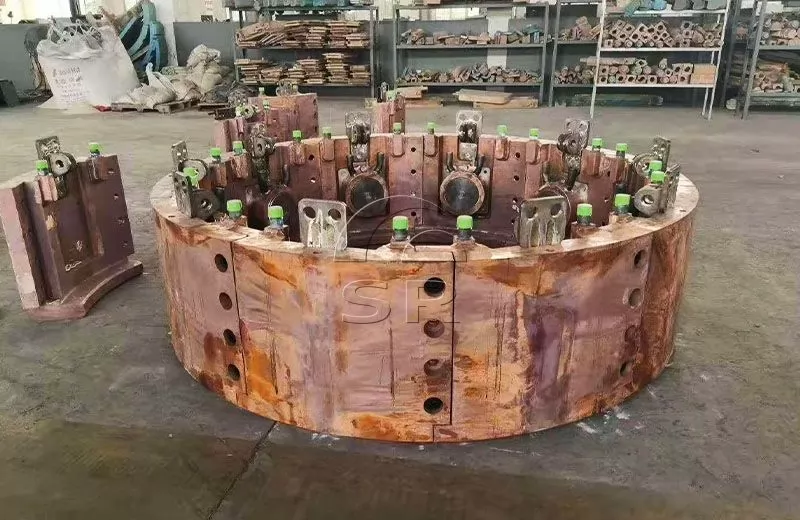
Submerged arc furnace pressure ring is used to monitor the change of air pressure in the furnace in real time, and adjust the air pressure automatically or manually according to the preset parameters to ensure the stability of air pressure in the furnace
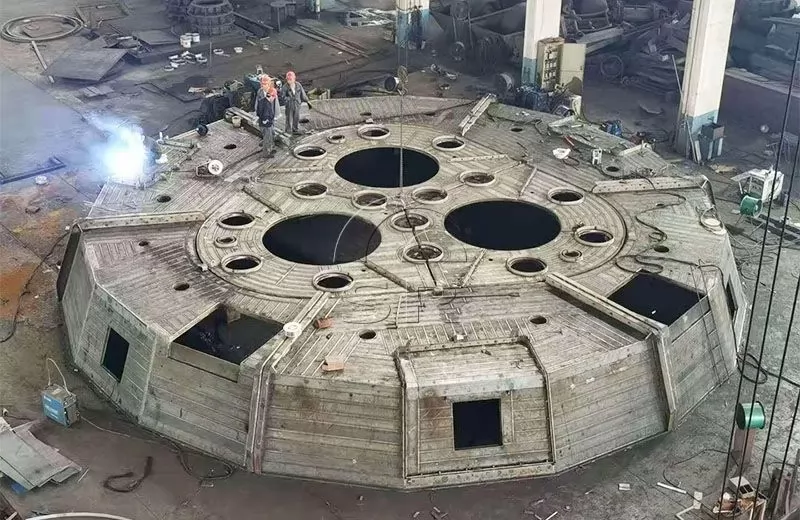
Submerged arc furnace water-cooled Roof is an important part of submerged arc furnace (also known as electric arc furnace, calcium carbide furnace or mining furnace), which is mainly used to close the top of furnace body and bear the high temperature and pressure in the furnace.
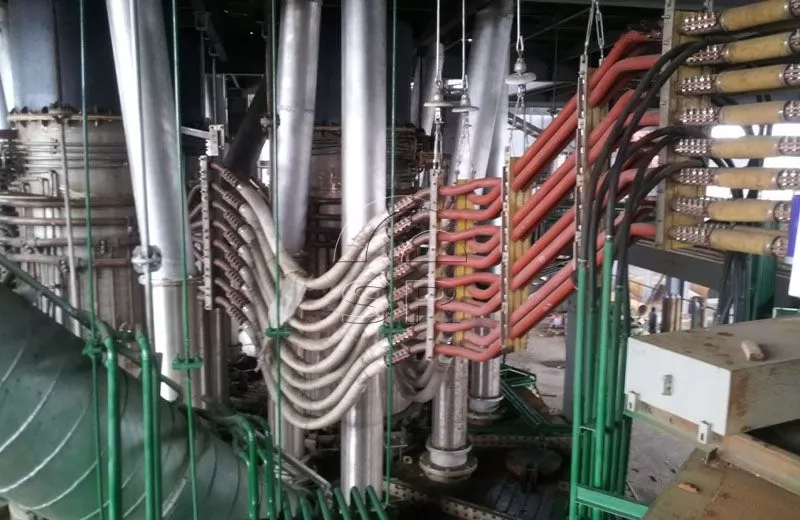
Short network bus systems), also known as high current line, refers to the general term of the carrier fluid from the secondary outlet terminal of the transformer to the electrode (including the electrode).
Navigation
E-mail: anna@srfurnace.com
Tel: +86 159 2955 5868
WhatsApp: +86 159 2955 5868
Add:
Room 422, 4th Floor, Building D, No. 5, Phase I, Fengdong Free Trade Industrial Park, Xixian New District, Shaanxi Province